Today's
EarthStation1.com 15% Off Commemorative Memorial Title: Jean
Shepherd Radio Shows All Known To Exist DVD, MP3 Download, USB
Today, June 13, 2026
June 13: World Softball Day: -- A day not
just about promoting softball, it is about promoting physical
activity for good health. World Softball Day also nurtures the
spirit of sportsmanship and social integration. The day inspires
future generations of girls and boys to seek excellence and
inspire empowerment from sports. This is a great day to go back to
sports and encourage those around us, especially children, to
pursue sports seriously. Softball has been a favorite among
Americans and we hope it will continue to be so for many years to
come. World Softball Day has been celebrated every year on June 13
since its inception in 2005. The day celebrates softball, a sport
that is played by approximately 30 million people around the
world. Many suspect that softball is an easier version of
baseball, one that is primarily enjoyed by children and women -
that is not true. Softball was invented so that more people could
enjoy a version of baseball indoors. This misconception along with
the idea that softball is any easier than baseball is the two
common misunderstandings that trouble the popular game. The
softball field is usually made of dirt or brick dust. However, the
field may also be made of solid and dry surfaces such as
artificial turf or asphalt. There are four bases on the infield -
first base, second base, third base, and home plate. The bases are
arranged in a square and are usually 60 feet apart. Near the
center of this square is the pitcher's mound, and within the
circle is a small flat rectangular piece of rubber that is kept no
more than 50 feet from home plate, depending on the league the
game is being played in. The object of the game is to score more
runs than the opposing team by hitting the ball and running around
the bases, touching each one in succession. A game of softball
usually has seven innings. Each inning is divided into a top half,
in which the visiting team bats and tries to score runs, while the
home team tries to record three outs. In the bottom half, the
teams' roles are reversed. Some leagues may even play within a
time limit instead of innings. On Sale @ 15% Off Discount Till
Midnight PT!
https://store.earthstation1.com/complete-jean-shepherd-radio-and-lp-collection-mp3-dvds-2-dis32.html
Today's
EarthStation1.com 15% Off Commemorative Memorial Title:
Revelation: The History Of Christianity DVD, Video Download, USB
Drive
Today, June 13, 2026
June 13, 313: Religion: The History Of
Religion: Abrahamic Religions: Christianity: The Edict Of Milan:
-- The February 313 AD agreement to treat Christians benevolently
within the Roman Empire, signed by Roman Emperor Constantine The
Great and Roman co-emperor Valerius Licinius, is posted in
Nicomedia, at that time the eastern and most senior capital city
of the Roman Empire, located in what is now Turkey. The Edict Of
Milan (Latin: Edictum Mediolanense; Greek: Diatagma Ton
Mediolanon) granted religious freedom throughout the Roman Empire.
Western Roman Emperor Constantine I and Emperor Licinius, who
controlled the Balkans, met in Mediolanum (modern-day Milan) and,
among other things, agreed to change policies towards Christians
following the edict of toleration issued by Emperor Galerius two
years earlier in Serdica. The Edict Of Milan gave Christianity
legal status and a reprieve from persecution, but did not make it
the state church of the Roman Empire. That occurred in AD 380 with
the Edict of Thessalonica. The document is found both in
Lactantius's De Mortibus Persecutorum (Latin: The Death Of The
Persecution) and in Eusebius Of Caesarea's History Of The Church,
with marked divergences between the two. Whether or not there was
a formal "Edict Of Milan" is no longer really debated
among scholars, who aver to its existence, what they generally
reject is the story of the edict as it has come down in church
history. The version found in Lactantius is not in the form of an
edict. It is a letter from Licinius to the governors of the
provinces in the Eastern Empire he had just conquered by defeating
Maximinus later in the same year and issued in Nicomedia. On Sale
@ 15% Off Discount Till Midnight PT!
https://store.earthstation1.com/revelation-the-history-of-christianity-documentary.html
Today's
EarthStation1.com 15% Off Commemorative Memorial Title: The
Western Tradition TV Series DVD, MP4 Video Download, USB Drive
Today, June 13, 2026
June 13, 1381: The Middle Ages (The
Medieval Period, The Mediaeval Period): Peasant Revolts: Medieval
And Early Modern European Peasant Wars: The Peasants' Revolt (Wat
Tyler's Rebellion, The Great Rising): -- The Peasants' Revolt, led
by Wat Tyler, culminates in the burning of the Savoy Palace. The
Savoy Palace, considered the grandest nobleman's townhouse of
medieval London, was the residence of John of Gaunt until it was
destroyed in the Peasants' Revolt of 1381. It lay between the
Strand and the River Thames: the present Savoy Theatre and Savoy
Hotel were named in its memory. In the locality of the palace the
administration of law was by a special jurisdiction apart from the
rest of the county of Middlesex, known as the Liberty of the
Savoy. The next day, June 14, the 17 year-old Boy King Richard II
of England meets the rebels at Mile End on Blackheath and accedes
to most of their demands, including the abolition of serfdom.
Meanwhile, rebels enter the Tower of London without resistance and
kill the Lord Chancellor and the Lord High Treasurer, whom they
found inside. The day prior, June 12, 1381, inspired by the
sermons of the radical cleric John Ball and led by Wat Tyler, a
contingent of Kentish rebels had arrived at Blackheath in
Southeast London and entered the city, joined by many local
townsfolk, attacking the gaols, destroying the Savoy Palace,
setting fire to law books and buildings in the Temple, and killing
anyone associated with the royal government. On June 15, Richard
left the city to meet Tyler and the rebels at Smithfield. Violence
broke out, and Richard's party killed Tyler. Richard defused the
tense situation long enough for London's mayor, William Walworth,
to gather a militia from the city and disperse the rebel forces.
Richard immediately began to re-establish order in London and
rescinded his previous grants to the rebels. The revolt had also
spread into East Anglia, where the University of Cambridge was
attacked and many royal officials were killed. Unrest continued
until the intervention of Henry Despenser, who defeated a rebel
army at the Battle of North Walsham on June 25 or 26. Troubles
extended north to York, Beverley and Scarborough, and as far west
as Bridgwater in Somerset. Richard mobilised 4,000 soldiers to
restore order. Most of the rebel leaders were tracked down and
executed; by November, at least 1,500 rebels had been killed. The
Peasants' Revolt was the result of the socio-economic and
political tensions generated by the Black Death in the 1340s, the
high taxes resulting from the conflict with France during the
Hundred Years' War, instability within the local leadership of
London, and a host of other causes, sparks The Peasants' Revolt, a
major uprising across large parts of England. The final trigger
for the revolt was the intervention of a royal official, John
Bampton, in Essex on May 30 1381, when his attempts to collect
unpaid poll taxes in Brentwood ended in a violent confrontation,
which rapidly spread across the south-east of the country. A wide
spectrum of rural society, including many local artisans and
village officials, rose up in protest, burning court records and
opening the local gaols. The rebels sought a reduction in
taxation, an end to the system of unfree labour known as serfdom,
and the removal of the King's senior officials and law courts.
When they advanced on London, they were met at Blackheath by
representatives of the royal government, who unsuccessfully
attempted to persuade them to return home. King Richard II, then
aged 14, had retreated to the safety of The Tower Of London, but
most of the royal forces were abroad or in northern England. The
Peasants' Revolt has been widely studied by academics. Late
19th-century historians used a range of sources from contemporary
chroniclers to assemble an account of the uprising, and these were
supplemented in the 20th century by research using court records
and local archives. Interpretations of the revolt have shifted
over the years. It was once seen as a defining moment in English
history, but modern academics are less certain of its impact on
subsequent social and economic history. The revolt heavily
influenced the course of the Hundred Years' War, by deterring
later Parliaments from raising additional taxes to pay for
military campaigns in France. The revolt has been widely used in
socialist literature, including by the author William Morris, and
remains a potent political symbol for the political left,
informing the arguments surrounding the introduction of the
Community Charge in the United Kingdom during the 1980s. On Sale @
15% Off Discount Till Midnight PT!
https://store.earthstation1.com/the-western-tradition-dvd-set-all-52-shows-13-d5213.html
Today's
EarthStation1.com 15% Off Commemorative Memorial Title: American
Revolutionary War Documentaries DVD, Download, USB Drive
Today, June 13, 2026
June 13, 1777: The Age Of Enlightenment
(The Enlightenment, The Age Of Reason): The Age Of Revolution: The
Atlantic Revolutions: The American Enlightenment: The American
Revolution: The American Revolutionary War: -- Gilbert du Motier,
Marquis de Lafayette lands near Charleston, South Carolina, in
order to help the Continental Congress to train its army.
Marie-Joseph Paul Yves Roch Gilbert du Motier, Marquis de
Lafayette (September 6, 1757 - May 20, 1834), in the United States
often known simply as Lafayette, was a French aristocrat and
military officer who fought in the American Revolutionary War. A
close friend of George Washington, Alexander Hamilton, and Thomas
Jefferson, Lafayette was a key figure in the French Revolution of
1789 and the July Revolution of 1830. Born in Chavaniac, in the
province of Auvergne in south central France, Lafayette came from
a wealthy landowning family. He followed its martial tradition,
and was commissioned an officer at age 13. He became convinced
that the American cause in its revolutionary war was noble, and
traveled to the New World seeking glory in it. There, he was made
a major general; however, the 19-year-old was initially not given
troops to command. Wounded during the Battle of Brandywine, he
still managed to organize an orderly retreat. He served with
distinction in the Battle of Rhode Island. In the middle of the
war, he returned home to lobby for an increase in French support.
He again sailed to America in 1780, and was given senior positions
in the Continental Army. In 1781, troops in Virginia under his
command blocked forces led by Cornwallis until other American and
French forces could position themselves for the decisive Siege Of
Yorktown. Lafayette returned to France, and in 1787 was appointed
to the Assembly of Notables, which was convened in response to the
fiscal crisis. He was elected a member of the Estates-General of
1789, where representatives met from the three traditional orders
of French society - the clergy, the nobility, and the commoners.
After the forming of the National Constituent Assembly, he helped
write the Declaration of the Rights of Man and of the Citizen,
with Thomas Jefferson's assistance; inspired by the United States
Declaration Of Independence, this document invoked natural law to
establish basic principles of the democratic nation-state. In
keeping with the philosophy of natural liberty, Lafayette also
advocated for the end of slavery. After the storming of the
Bastille, Lafayette was appointed commander-in-chief of the
National Guard and tried to steer a middle course through the
French Revolution. In August 1792, the radical factions ordered
his arrest. Fleeing through the Austrian Netherlands, he was
captured by Austrian troops and spent more than five years in
prison. Lafayette returned to France after Napoleon Bonaparte
secured his release in 1797, though he refused to participate in
Napoleon's government. After the Bourbon Restoration of 1814, he
became a liberal member of the Chamber of Deputies, a position he
held for most of the remainder of his life. In 1824, President
James Monroe invited Lafayette to the United States as the
nation's guest; during the trip, he visited all twenty-four states
in the union at the time, meeting a rapturous reception. During
France's July Revolution of 1830, Lafayette declined an offer to
become the French dictator. Instead, he supported Louis-Philippe
as king, but turned against him when the monarch became
autocratic. Lafayette died in Paris, Kingdom of France, aged 76.
He is buried in Picpus Cemetery in Paris, under soil from Bunker
Hill. For his accomplishments in the service of both France and
the United States, he is sometimes known as "The Hero of the
Two Worlds". On Sale @ 15% Off Discount Till Midnight PT!
https://store.earthstation1.com/american-revolutionary-war-dvd-documentaries.html
Today's
EarthStation1.com 15% Off Commemorative Memorial Title: Lincoln
And The War Within: Election To Ft. Sumter DVD, MP4, USB Drive
Today, June 13, 2026
June 13, 1866: #BOTD: #HBD! Winfield
Scott, United States Army general and the unsuccessful
presidential candidate of the Whig Party in 1852 (1786-1866) (d.
May 29, 1866) is #born in Petersburg, Virginia. Known as "Old
Fuss And Feathers" and "The Grand Old Man Of The Army",
he served in three wars: the War Of 1812, the Mexican War, and the
U.S. Civil War. He served on active duty as a general longer than
any other person in American history, is rated as one of the
Army's most senior commissioned officers, and is ranked by many
historians as the best American commander of his time. Over the
course of his 53-year career, he commanded forces in the War Of
1812, the Black Hawk War, the Mexican-American War, and the Second
Seminole War. He was the army's senior officer at the start of the
American Civil War, and conceived the Union strategy known as the
Anaconda Plan, which was used to defeat the Confederacy. He served
as Commanding General of the United States Army for twenty years,
longer than any other holder of the office. Scott was born and
educated in Virginia; after brief attendance at the College of
William and Mary and study in a law office, he attained admission
to the bar. Scott practiced law briefly, and served in the
Virginia Militia during the Chesapeake-Leopard Affair. In 1808,
Scott was commissioned as a captain in the Light Artillery. He
rose to prominence during the War Of 1812, and attained promotion
to brigadier general. Scott remained in the Army after the war,
served in several command positions, and carried out high level
staff tasks, including frequent updates to the Army's field
regulations. After missing out on appointment as the Army's
commanding general in 1828, he received the appointment in 1841;
he served in this post until his retirement in 1861, shortly after
the start of the American Civil War. A national hero after the
Mexican-American War, he served as military governor of Mexico
City. His stature was so high that in 1852, the Whig Party passed
over its own incumbent President, Millard Fillmore to nominate
Scott as their candidate in that year's presidential election. At
six feet five inches, he remains the tallest man ever nominated by
a major party. Scott lost to Democrat Franklin Pierce in the
general election, but remained a popular national figure,
receiving a brevet promotion to lieutenant general in 1855,
becoming the first American since George Washington to hold that
rank. At the start of the Civil War, Scott took steps to defend
Washington, DC and ensure the successful inauguration of Abraham
Lincoln. Though too old and infirm to take the field, Scott served
as Lincoln's principal military adviser at the start of the war,
and conceived of the Anaconda Plan; though dismissed by critics
who regarded the plan's extended and prolonged blockade of
southern ports as too passive, Scott's idea was incorporated into
the overall Union strategy which brought about the defeat of the
Confederacy. During his years as commanding general, Scott took
great interest in the development of the United States Military
Academy (West Point). Following friction with senior field
commander George B. McClellan, Scott retired to West Point.
Winfield Scott died at West Point of natural causes, age 79.
President Andrew Johnson ordered the flags flown at half-staff to
honor Scott, and Scott's funeral was attended by many of the
leading Union generals, including Grant, George G. Meade, George
H. Thomas, and John Schofield. He is buried at the West Point
Cemetery. On Sale @ 15% Off Discount Till Midnight PT!
https://store.earthstation1.com/lincoln-and-the-war-within-election-to-sumter-dvd-mp4-us4.html
Today's
EarthStation1.com 15% Off Commemorative Memorial Title: The Nobel
Century Nobel Prize History TV Series DVD, MP4, USB Stick
Today, June 13, 2026
June 13, 1865: #BOTD: #HBD! W. B. Yeats,
Irish poet and playwright, one of the foremost figures of
20th-century literature, pillar of the Irish literary
establishment, co-founder of The Abbey Theatre, Senator of the
Irish Free State for two terms, driving force behind the Irish
Literary Revival along with Lady Gregory, Edward Martyn and
others. Nobel Prize laureate, leader of The Hermetic Order Of The
Golden Dawn (HOGD) (d. January 28, 1939) is #born William Butler
Yeats in Sandymount, Ireland. W. B. Years was educated in
Sandymount, Ireland and in London, England. He spent childhood
holidays in County Sligo and studied poetry from an early age when
he became fascinated by Irish legends and the occult. These topics
feature in the first phase of his work, which lasted roughly until
the turn of the 20th century. His earliest volume of verse was
published in 1889, and its slow-paced and lyrical poems display
debts to Edmund Spenser, Percy Bysshe Shelley, and the poets of
the Pre-Raphaelite Brotherhood. From 1900, his poetry grew more
physical and realistic. He largely renounced the transcendental
beliefs of his youth, though he remained preoccupied with physical
and spiritual masks, as well as with cyclical theories of life. In
1923, he was awarded the Nobel Prize in Literature. During 1885,
Yeats was involved in the formation of the Dublin Hermetic Order.
The society held its first meeting on 16 June, with Yeats acting
as its chairman. The same year, the Dublin Theosophical lodge was
opened in conjunction with Brahmin Mohini Chatterjee, who
travelled from the Theosophical Society in London to lecture.
Yeats attended his first seance the following year. He later
became heavily involved with the Theosophy and with hermeticism,
particularly with the eclectic Rosicrucianism of the Hermetic
Order of the Golden Dawn. During seances held from 1912, a spirit
calling itself "Leo Africanus" apparently claimed it was
Yeats's Daemon or anti-self, inspiring some of the speculations in
Per Amica Silentia Lunae. He was admitted into the Golden Dawn in
March 1890 and took the magical motto Daemon est Deus
inversus-translated as 'Devil is God inverted'. He was an active
recruiter for the sect's Isis-Urania Temple, and brought in his
uncle George Pollexfen, Maud Gonne, and Florence Farr. Although he
reserved a distaste for abstract and dogmatic religions founded
around personality cults, he was attracted to the type of people
he met at the Golden Dawn. He was involved in the Order's power
struggles, both with Farr and Macgregor Mathers, and was involved
when Mathers sent Aleister Crowley to repossess Golden Dawn
paraphernalia during the "Battle of Blythe Road". After
the Golden Dawn ceased and splintered into various offshoots,
Yeats remained with the Stella Matutina until 1921. W. B. Yeats
died at the Hotel Ideal Sejour, in Menton, France, aged 73. He was
buried after a discreet and private funeral at
Roquebrune-Cap-Martin, a commune in the Alpes-Maritimes department
in the Provence-Alpes-Cote d'Azur region, Southeastern France,
between Monaco and Menton. Attempts had been made at Roquebrune to
dissuade the family from proceeding with the removal of the
remains to Ireland due to the uncertainty of their identity. His
instructions were "If I die, bury me up there [at Roquebrune]
and then in a year's time when the newspapers have forgotten me,
dig me up and plant me in Sligo'." In September 1948, Yeats's
body was moved to the churchyard of St Columba's Church,
Drumcliff, County Sligo, on the Irish Naval Service corvette LE
Macha. #WBYeats #WilliamButlerYeats #Poets #Politicians #Magicians
#Magickians #Hermetics #Literature #AbbeyTheatre #IrishFreeState
#IrishLiteraryRevival #IrishLiteraryRenaissance #CelticTwilight
#Theosophy #TheosophicalSociety #Hermeticism #Rosicrucianism
#HermeticOrderOfTheGoldenDawn #HOGD #GoldenDawn #GD #
DaemonEstDeusInversus #IsisUraniaTemple #BattleOfBlytheRoad
#StellaMatutina #MP4 #VideoDownload #DVD On Sale @ 15% Off
Discount Till Midnight PT!
https://store.earthstation1.com/the-nobel-century-nobel-prize-history-tv-series-dvd-mp4-us4.html
Today's
EarthStation1.com 15% Off Commemorative Memorial Title: The Occult
History Of The Third Reich DVD, Video Download, USB Drive
Today, June 13, 2026
June 13. 1884: #BOTD: Anton Drexler,
German far-right political agitator for the Volkisch movement in
the 1920s, founder of The German Workers' Party (German: Deutsche
Arbeiterpartei), DAP), the pan-German and anti-Semitic antecedent
of the Nazi Party (NSDAP), leading member of the Thule Society, a
German occultist and volkisch group founded in Munich right after
World War I, named after a mythical northern country in Greek
legend, which organization created the Nazi Party (d. February 24,
1942) is #born in Munich, German Empire. Anton Drexler founded the
German Worker's Party on January 5, 1919 in Munich, which
ultimately became the Nazi Party. He was succeeded on July 29,
1921 by Adolf Hitler, and Anton Drexler mentored Hitler during his
early years in politics. The German Workers' Party was sponsored
by Thule, a German occult organization influenced by the mystical
and racists beliefs of Guido von List, Austrian occultist,
journalist, playwright, and novelist who expounded a modern Pagan
new religious movement known as Wotanism, which he claimed was the
revival of the religion of the ancient German race, and which
included an inner set of Ariosophical teachings (so-called
"Aryanism" that he termed Armanism. The party's
membership emerged from the German nationalist, racist and
populist Freikorps paramilitary culture, which fought against the
communist uprisings in post-World War I Germany. The party was
created as a means to draw workers away from communism and into
volkisch nationalism. Initially, Nazi political strategy focused
on anti-big business, anti-bourgeois and anti-capitalist rhetoric,
although such aspects were later downplayed in order to gain the
support of industrial entities and in the 1930s the party's focus
shifted to anti-Semitic and anti-Marxist themes. On September 12,
1919, Adolf Hitler became member No. 7, though he was
simultaneously a spy employed to observe and report on the group's
activities by the Germany army. On February 24, 1920, the Nazi
Party was founded by Drexler, just as he had founded its
precursor, the German Workers' Party. Hitler reorganized it and
renamed it the National Socialist German Workers' Party
(Nationalsozialistische Deutsche Arbeiterpartei, abbreviated
NSDAP), commonly referred to in English as the Nazi Party. Anton
Drexler died on the twenty-second anniversary of his founding of
the Nazi Party, aged 57 in Munich, Nazi Germany after a lengthy
illness due to alcoholism. He is buried in Westfriedhof Munchen
cemetery in Munich, Germany. On Sale @ 15% Off Discount Till
Midnight PT!
https://store.earthstation1.com/the-occult-history-of-the-third-reich-4-part-tv-series-2-dv42.html
Today's
EarthStation1.com 15% Off Commemorative Memorial Title:
Information Please Radio Quiz Show MP3 DVD, Audio Download, USB
Drive
Today, June 13, 2026
June 13, 1892: #BOTD: #HBD! Basil
Rathbone MC, South African-English-American stage, film and
television actor (d. July 21, 1967) is #born Philip St. John Basil
Rathbone in Johannesburg, South African Republic, to British
parents. He rose to prominence in the United Kingdom as a
Shakespearean stage actor and went on to appear in more than 70
films, primarily costume dramas, swashbucklers and, occasionally,
horror films. Rathbone frequently portrayed suave villains or
morally ambiguous characters, such as Mr. Murdstone in David
Copperfield (1935) and Sir Guy of Gisbourne in The Adventures of
Robin Hood (1938). His most famous role was that of Sherlock
Holmes in fourteen Hollywood films made between 1939 and 1946 and
in a radio series. His later career included roles on Broadway, as
well as self-ironic film and television work. He received a Tony
Award in 1948 as Best Actor in a Play. He was also nominated for
two Academy Awards and was honoured with three stars on the
Hollywood Walk of Fame. Basil Rathbone died suddenly of a heart
attack in New York City at the age of 75. His body is interred in
a crypt in the Shrine Of Memories Mausoleum at Ferncliff Cemetery
in Hartsdale, New York. On Sale @ 15% Off Discount Till Midnight
PT!
https://store.earthstation1.com/complete-information-please-quiz-show-old-time-radio-mp3-dv3.html
Today's
EarthStation1.com 15% Off Commemorative Memorial Title: Portraits
Of American Presidents Nos. 1-42 TV Series MP4 Download DVD
Today, June 13, 2026
June 13, 1893: The United States: The
History Of The United States: The Gilded Age: The Presidencies Of
Grover Cleveland: The Second Presidency Of Grover Cleveland: The
Cancer Surgery Of Grover Cleveland: -- POTUS Grover Cleveland
notices a rough spot in his mouth and on July 1 undergoes secret,
successful surgery to remove a large, cancerous portion of his
jaw; the operation was not revealed to the public until 1917, nine
years after the president' death. In the midst of the fight for
repeal of Free Silver coinage in 1893, Cleveland sought the advice
of the White House doctor, Dr. O'Reilly, about soreness on the
roof of his mouth and a crater-like edge ulcer with a granulated
surface on the left side of Cleveland's hard palate. Clinical
samples were sent anonymously to the Army Medical Museum; the
diagnosis was an epithelioma, rather than a malignant cancer.
Cleveland decided to have surgery secretly, to avoid further panic
that might worsen the financial depression. The surgery occurred
on July 1, to give Cleveland time to make a full recovery in time
for the upcoming Congressional session. Under the guise of a
vacation cruise, Cleveland and his surgeon, Dr. Joseph Bryant,
left for New York. The surgeons operated aboard the Oneida, a
yacht owned by Cleveland's friend E. C. Benedict, as it sailed off
Long Island. The surgery was conducted through the President's
mouth, to avoid any scars or other signs of surgery. The team,
sedating Cleveland with nitrous oxide and ether, successfully
removed parts of his upper left jaw and hard palate. The size of
the tumor and the extent of the operation left Cleveland's mouth
disfigured. During another surgery, Cleveland was fitted with a
hard rubber dental prosthesis that corrected his speech and
restored his appearance. A cover story about the removal of two
bad teeth kept the suspicious press placated. Even when a
newspaper story appeared giving details of the actual operation,
the participating surgeons discounted the severity of what
transpired during Cleveland's vacation. In 1917, one of the
surgeons present on the Oneida, Dr. William W. Keen, wrote an
article detailing the operation. Cleveland enjoyed many years of
life after the tumor was removed, and there was some debate as to
whether it was actually malignant. Several doctors, including Dr.
Keen, stated after Cleveland's death that the tumor was a
carcinoma, a category of malignant types of cancer that develop
from tissues that line the outer surfaces of organs and blood
vessels (epithelial cells) that arise from cells that originated
in the primary layer of cells that formed during embryonic
development (embryogenesis) known as the germ layer. Other
suggestions included ameloblastoma, a rare, benign or cancerous
tumor of odontogenic epithelium (ameloblasts, or outside portion
of the teeth during development) much more commonly appearing in
the lower jaw than the upper jaw; or a benign salivary mixed tumor
(also known as a pleomorphic adenoma), a common benign salivary
gland growth having a malignant potentiality. In the 1980s,
analysis of the specimen finally confirmed the tumor to be
verrucous carcinoma, a rare low-grade epithelial cancer with a low
potential for metastasis. On Sale @ 15% Off Discount Till Midnight
PT!
https://store.earthstation1.com/portraits-of-american-presidents-nos-142-tv-series-mp4-download1424.html
Today's
EarthStation1.com 15% Off Commemorative Memorial Title: The Cotton
Club Remembered (The Cotton Club At The Ritz) MP4 Or DVD
Today, June 13, 2026
June 13, 1905: #BOTD: #HBD! Doc Cheatham,
African American jazz trumpeter, singer, and bandleader (d. June
2, 1997) is #born Adolphus Anthony Cheatham in Nashville of
African, Cherokee and Choctaw heritage. After having played in
some of the leading jazz groups from the 1920s on, Doc Cheatham
enjoyed renewed acclaim in later decades of his career. He himself
agreed with the critical assessment that he was probably the only
jazz musician to create his best work after the age of 70.
Cheatham was born in Nashville, Tennessee of African, Cherokee and
Choctaw heritage. He noted there was no jazz music there in his
youth; like many in the United States he was introduced to the
style by early recordings and touring groups at the end of the
1910s. He abandoned his family's plans for him to be a pharmacist
(although retaining the medically inspired nickname "Doc")
to play music, initially playing soprano and tenor saxophone in
addition to trumpet in Nashville's African American Vaudeville
theater. Cheatham later toured in band accompanying blues singers
on the Theater Owners Booking Association circuit. His early jazz
influences included Henry Busse and Johnny Dunn, but when he moved
to Chicago in 1924 he heard King Oliver. Oliver's playing was a
revelation to Cheatham. Cheatham followed the jazz King around.
Oliver gave young Cheatham a mute which Cheatham treasured and
performed with for the rest of his career. A further revelation
came the following year when Louis Armstrong returned to Chicago.
Armstrong would be a lifelong influence on Cheatham. Cheatham
played in Albert Wynn's band (and occasionally substituted for
Armstrong at the Vendome Theater), and recorded on sax with Ma
Rainey before moving to Philadelphia in 1927, where he worked with
the bands of Bobby Lee and Wilbur de Paris before moving to New
York City the following year. After a short stint with Chick Webb
he left to tour Europe with Sam Wooding's band. Cheatham returned
to the United States in 1930, and played with Marion Handy and
McKinney's Cotton Pickers before landing a job with Cab Calloway.
Cheatham was Calloway's lead trumpeter from 1932 through 1939. He
performed with Benny Carter, Teddy Wilson, Fletcher Henderson, and
Claude Hopkins in the 1940s; after World War II he started working
regularly with Latin bands in New York City, including the bands
of Perez Prado, Marcelino Guerra, Ricardo Ray (on whose catchy,
hook-laden album "Jala, Jala Boogaloo, Volume II", he
played exquisitely (but uncredited), particularly on the track
"Mr. Trumpet Man"), Machito, and others. The first time
Cheatham joined Machito's band, he was fired because he couldn't
cope with clave rhythm. Cheatham eventually got the hang of it. In
addition to continuing Latin gigs, he played again with Wilbur de
Paris and Sammy Price. He led his own band on Broadway for five
years starting in 1960, after which he toured with Benny Goodman.
In 1959, the U.S. State Department funded a trip for bandleader
Herbie Mann to visit Africa, after they heard his version of
"African Suite", and Cheatham joined the band for a
grueling 14-week tour between December and April 1960 to Sierra
Leone, Liberia, Nigeria, Mozambique, Rhodesia, Tanganyika, Kenya,
Ethiopia, Sudan, Morocco, and Tunisia. In the 1970s, Doc Cheatham
made a vigorous self-assessment to improve his playing, including
taping himself and critically listening to the recordings, then
endeavoring to eliminate all cliches from his playing. The
discipline paid off, and Doc received ever-improving critical
attention. His singing career began almost by accident in a Paris
recording studio on 2 May 1977. As a level and microphone check at
the start of a recording session with Sammy Price's band, Cheatham
sang and scatted his way through a couple of choruses of "What
Can I Say Dear After I Say I'm Sorry". The miking happened to
be good from the start and the tape machine was already rolling,
and the track was issued on the LP Doc Cheatham: Good for What
Ails You. His singing was well received and Cheatham continued to
sing in addition to play music for the rest of his career.
Cheatham toured widely in addition to his regular Sunday brunch
gig leading the band at Sweet Basil in Manhattan's Greenwich
Village in his final decade. During one of his frequent trips to
New Orleans, Louisiana, he met and befriended young trumpet
virtuoso Nicholas Payton. In 1996 the two trumpeters and pianist
Butch Thompson recorded a CD for Verve Records, Doc Cheatham and
Nicholas Payton, which won them a Grammy Award. Doc Cheatham
continued playing until two days before his death from a stroke,
eleven days shy of his 92nd birthday, in Washington D.C.. He is
buried at Greenwood Cemetery in Nashville, Tennessee. On Sale @
15% Off Discount Till Midnight PT!
https://store.earthstation1.com/the-cotton-club-remembered-aka-the-cotton-club-at-the-ritz-mp4-or-dvd.html
Today's
EarthStation1.com 15% Off Commemorative Memorial Title: Yours
Truly Johnny Dollar Radio Series MP3 DVD, Download, USB Drive
Today, June 13, 2026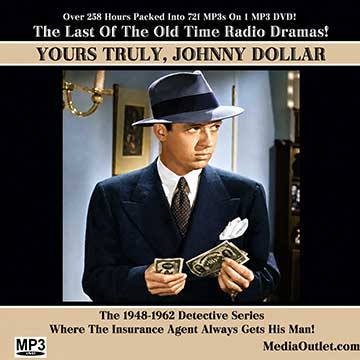
June 13, 1913: #BOTD: #HBD! Bob Bailey,
an American movie film actor who performed mostly on radio in such
shows as Let George Do It and Yours Truly, Johnny Dollar (d.
August 13, 1983) is #born Robert Bainter Bailey in Toledo, Ohio.
One of Bailey's earliest roles on radio was that of the title
character in the comedy serial Mortimer Gooch (1936-37) on CBS. In
the early 1940s Bailey was regularly featured on network radio
programs originating from Chicago. He played the boyfriend of the
title character's sister in That Brewster Boy and the father of
the title character in Meet Corliss Archer. He played Bob Jones in
Kitty Keene, Inc.. He was signed in 1943 by 20th Century-Fox and
appeared in seven feature films; the first two (in which he was
most prominent) starred Laurel and Hardy. After the studio failed
to renew Bailey's one-year contract, he returned to radio.
Starting in 1946, Bailey starred as freelance detective George
Valentine in the radio drama Let George Do It, but he is best
remembered as the title character in the long-running radio series
Yours Truly, Johnny Dollar. The program ran from 1949 to 1962 (it
and Suspense were the last CBS radio drama series on the air until
the CBS Radio Mystery Theater began in 1974) and featured the
exploits of "America's fabulous freelance insurance
investigator"; Bailey starred as Johnny from 1955 to 1960 and
wrote the script for the December 22, 1957 episode "The
Carmen Kringle Matter" using the pen name "Robert
Bainter". With CBS devoting more money to television and
wanting to reduce costs, Yours Truly, Johnny Dollar relocated to
New York in 1960 and Bailey, unwilling to relocate, was dismissed.
Having performed in almost 500 episodes, he had made the role his
own. With the end of his involvement, the show wound down over the
following two years (with two different actors) before being taken
off the air in 1962, by which time Bailey had virtually given up
acting. Near the end of the 1962 film Birdman of Alcatraz, he can
be seen as one of the reporters gathered around Burt Lancaster and
Edmond O'Brien; O'Brien had portrayed Johnny Dollar on the radio
from 1950 to 1952. Bailey's role was only a bit, and most of his
dialogue was dubbed by another actor. Bob Bailey died in
Lancaster, California aged 70 in a rest home, ten years after he
was admitted following a stroke. He is buried at The Chapel Of The
Pines Crematory in Los Angeles, California. On Sale @ 15% Off
Discount Till Midnight PT!
https://store.earthstation1.com/yours-truly-johnny-dollar-old-time-radio-dual-layer-mp3-dv3.html
Today's
EarthStation1.com 15% Off Commemorative Memorial Title: The Great
War (1964) TV Documentary Series DVD, Video Download, USB
Today, June 13, 2026
June 13, 1917: The European Civil War:
World War I: The First European War (The European Theater Of World
War I): The Western Front Of World War I: Air Warfare Of World War
I: Strategic Bombing During World War I: German Strategic Bombing
During World War I: -- The deadliest German air raid of the war is
carried out on London by Gotha G.IV heavy bombers of Kagohl 3
(German acronym: Kampfgeschwader der Obersten Heeresleitung 3,
"Combat Squadron of the Supreme Command 3") of the
Luftstreitkrafte (Imperial German Air Service), resulting in 162
deaths, including 46 children, and 432 injuries. It was the first
daylight raid on London, and no Gothas were lost. Among the dead
were 18 children killed by a bomb falling on the Upper North
Street School primary school in Poplar, East London. The reason
for the relatively large numbers of casualties seems to have been
ignorance as to the threat posed by aerial bombardment of a city
in daylight. Lt. Charles Chabot, a Royal Flying Corps (RFC) pilot
on leave recorded that: "...Raids hadn't become a very
serious thing and everybody crowded out into the street to watch.
They didn't take cover or dodge". As there had been little
planning, early attempts to intercept the Gothas were ineffective.
Large numbers of British aircraft were put into the air but were
unable to climb high enough to engage the bombers. Captain James
McCudden was part of the engaging force of 92 aircraft but due to
the limited performance of his machine, had no success in
intercepting the bombers. News of the raid was received
enthusiastically in Germany and the commander of Kagohl 3,
Hauptmann Ernst Brandenburg, was summoned to Berlin to be awarded
the Pour le Merite, Germany's highest military honour. On taking
off for the return journey, the engine of his aircraft failed,
Brandenburg was severely injured and his pilot, Oberleutnant
Freiherr von Trotha, was killed. In 1938, Air Commodore Lionel
Charlton described the raid as "the beginning of a new epoch
in the history of warfare". On Sale @ 15% Off Discount Till
Midnight PT!
https://store.earthstation1.com/the-great-war-dvd-set-1964-wwi-tv-series-26-shows-1964266.html
Today's
EarthStation1.com 15% Off Commemorative Memorial Title:
Washington, D.C. History Video Set DVD, MP4 Download, USB Flash
Drive
Today, June 13, 2026
June 13, 1937: #BOTD #HBD! Eleanor Holmes
Norton, African American organizer for the Student Nonviolent
Coordinating Committee; Mississippi Freedom Summer actvist;
founding advisory board member of the Women's Rights Law Reporter,
the first American legal periodical focused exclusively on women's
rights law; signer of the Black Woman's Manifesto, a classic
document of the Black feminist movement; lawyer and Democratic
politician, serving since 1991 as a delegate to the United States
House Of Representatives representing the District of Columbia; is
#born Eleanor K. Holmes in Washington, D.C.. While a student at
Dunbar High School she was elected junior class president and was
a member of the National Honor Society. While she attended Antioch
College (B.A. 1960), Yale University (M.A. in American Studies
1963) and Yale Law School (LL.B. 1964), she was active in the
civil rights movement and an organizer for the Student Nonviolent
Coordinating Committee. By the time she graduated from Antioch,
she had already been arrested for organizing and participating in
sit-ins in Washington, D.C., Maryland, and Ohio. While in law
school, she traveled to Mississippi for the Mississippi Freedom
Summer and worked with civil rights stalwarts such as Medgar
Evers. Her first encounter with a recently released but physically
beaten Fannie Lou Hamer forced her to bear witness to the
intensity of violence and Jim Crow repression in the South. Her
time with the SNCC inspired her lifelong commitment to social
activism and her budding sense of feminism. She contributed the
piece "For Sadie and Maud" to the 1970 anthology
Sisterhood is Powerful: An Anthology of Writings From The Women's
Liberation Movement, edited by Robin Morgan. Norton was on the
founding advisory board of the Women's Rights Law Reporter
(founded 1970), the first legal periodical in the United States to
focus exclusively on the field of women's rights law. In the early
1970s, Norton was a signer of the Black Woman's Manifesto, a
classic document of the Black feminist movement. Upon graduation
from law school, she worked as a law clerk to Federal District
Court Judge A. Leon Higginbotham, Jr. In 1965, she became the
assistant legal director of the American Civil Liberties Union, a
position she held until 1970. In 1970, Norton represented sixty
female employees of Newsweek who had filed a claim with the Equal
Employment Opportunity Commission (EEOC) that Newsweek had a
policy of allowing only men to be reporters. The women won, and
Newsweek agreed to allow women to be reporters. Holmes Norton
specialized in freedom of speech cases, and her work included
winning a Supreme Court case on behalf of the National States'
Rights Party, a victory she put into perspective in an interview
with one of the District of Columbia Bar's website editors: "I
defended the First Amendment, and you seldom get to defend the
First Amendment by defending people you like ... You don't know
whether the First Amendment is alive and well until it is tested
by people with despicable ideas. And I loved the idea of looking a
racist in the face-remember this was a time when racism was much
more alive and well than it is today-and saying, 'I am your
lawyer, sir, what are you going to do about that?'" She
worked as an adjunct assistant professor at New York University
Law School from 1970 to 1971. In 1970, Mayor John Lindsay
appointed her as the head of the New York City Human Rights
Commission, and she held the first hearings in the country on
discrimination against women. Prominent feminists from throughout
the country came to New York City to testify, while Norton used
the platform as a means of raising public awareness about the
application of the Civil Rights Act Of 1964 to women and sex
discrimination. President Jimmy Carter appointed Holmes Norton as
the chair of the EEOC in 1977; she became the first female head of
the agency. Norton released the EEOC's first set of regulations
outlining what constituted sexual harassment and declaring that
sexual harassment was indeed a form of sexual discrimination that
violated federal civil rights laws. She has also served as a
senior fellow of the Urban Institute. Norton became a professor at
Georgetown University Law Center in 1982. During this time, she
was a vocal anti-apartheid activist in the U.S., and was a part of
the Free South Africa Movement. In 1990, Norton, along with 15
other African American women and one man, formed African American
Women for Reproductive Freedom. She contributed the piece "Notes
of a Feminist Long Distance Runner" to the 2003 anthology
Sisterhood Is Forever: The Women's Anthology for a New Millennium,
edited by Robin Morgan. She received a Foremother Award for her
lifetime of accomplishments from the National Research Center for
Women & Families in 2011. Norton was elected in 1990 as a
Democratic delegate to the House of Representatives. She defeated
city council member Betty Ann Kane in the primary despite the
last-minute revelation that Norton and her husband, both lawyers,
had failed to file D.C. income tax returns between 1982 and 1989.
The Nortons paid over $80,000 in back taxes and fines. Her
campaign manager was Donna Brazile. The delegate position was open
because Del. Walter Fauntroy was running for mayor rather than
seeking reelection. Norton received 39 percent of the vote in the
Democratic primary election, and 59 percent of the vote in the
general election. Norton took office on January 3, 1991, and has
been reelected every two years since. Delegates to Congress are
entitled to sit in the House of Representatives and vote in
committee, and to offer amendments in the Committee of the Whole,
but are not allowed to take part in legislative floor votes. The
district and four U.S. territories-Guam, American Samoa, the
Northern Mariana Islands, and the U.S. Virgin Islands-send
delegates to Congress; the Resident Commissioner of Puerto Rico
has the same rights as delegates. William Thomas and the White
House Peace Vigil inspired Norton to introduce the Nuclear
Disarmament and Economic Conversion Act, which would require the
United States to disable and dismantle its nuclear weapons at such
time as all other nations possessing nuclear weapons do likewise.
Norton has been introducing a version of the bill since 1994.
Legislation strongly supported by Norton that would grant the
District of Columbia a voting representative in the House, the
District of Columbia House Voting Rights Act of 2009, was passed
by the United States Senate on February 26, 2009. However, the
legislation stalled in the House and failed to pass prior to the
end of the 111th Congress. The legislation proposed in 2009 did
not grant Norton the right to vote in the 111th Congress, as she
would have had to remain in her elected office of delegate for the
duration of her two-year term. In September 2010, the national
press criticized Norton after the release of a voice message in
which she solicited campaign funds from a lobbyist representing a
project that she oversaw. Norton countered that the message was
typical of appeals made by all members of Congress and that the
call was made from campaign offices not paid for by taxpayers. In
March 2012, the public radio series This American Life featured
the voicemail message at the start of a program on lobbying titled
"Take the Money and Run for Office". In May 2012, Norton
was blocked from testifying on an anti-abortion bill in her
district - the second time she has been blocked from speaking
about abortion. She insisted that it was a denial of a common
courtesy. Representative Jerrold Nadler supported Norton's
protest, saying "Never in my 20 years as a member of Congress
have I seen a colleague treated so contemptuously." In August
2014, after the D.C. Board of Elections voted to put a question
about marijuana legalization on the ballot in November 2014,
Norton vowed to defend against any congressional attempt to stop
the district from voting on the issue and to, if approved, fight
any attempt to prevent implementation. She is a member of the
Congressional Progressive Caucus and the Congressional Black
Caucus. On Sale @ 15% Off Discount Till Midnight PT!
https://store.earthstation1.com/washington-dc-history-videos-dvd-mp4-download-usb-driv4.html
Today's
EarthStation1.com 15% Off Commemorative Memorial Title: Nazis: The
Occult Conspiracy MP4 Video Download Or DVD
Today, June 13, 2026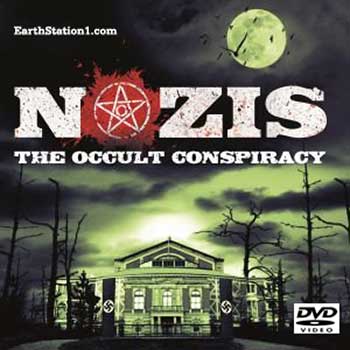
June 13. 1943: #BOTD: #HBD! Malcolm
McDowell, English actor who first became known for portraying Mick
Travis in Lindsay Anderson's If.... (1968), a role he later
reprised in O Lucky Man! (1973) and Britannia Hospital (1982),
wose performance in If.... prompted Stanley Kubrick to cast him as
Alex in A Clockwork Orange (1971), the role for which McDowell
became best known, is #born Malcolm John Taylor in Horsforth, West
Riding of Yorkshire, the son of hotelier Edna (nee McDowell) and
RAF officer (and later pub owner) Charles Taylor. McDowell's other
notable film credits include The Raging Moon (1971), Voyage of the
Damned (1976), Time After Time (1979), Caligula (1979), Cat People
(1982), Blue Thunder (1983), The Caller (1987), Star Trek
Generations (1994), Tank Girl (1995), Mr. Magoo (1997), I'll Sleep
When I'm Dead (2003), The Company (2003), Evilenko (2004), The
Artist (2011), and Bombshell (2019). He also played Dr. Samuel
Loomis in the 2007 remake of Halloween and its sequel, Halloween
II (2009). On television, McDowell appeared as Dornford Yates's
gentleman hero Richard Chandos in the 1978 BBC adaptation of She
Fell Among Thieves. He had recurring roles on Entourage
(2005-2011) The Mentalist (2008-2015) and Heroes (2006-2007),
starring roles in Franklin & Bash (2011-2014) and Mozart in
the Jungle (2014-2018), and has played Patrick "Pop"
Critch in the Canadian series Son of a Critch since 2022. He has
also voiced characters in various animated shows, films and video
games, including Metallo in Superman: The Animated Series and
Justice League Unlimited, Vater Orlaag in Metalocalypse, Dr.
Calico in Bolt, President Eden in Fallout 3, Molag Bal in The
Elder Scrolls Online, Admiral Tolwyn in the Wing Commander
franchise, and Dr. Monty in Call of Duty: Black Ops III. McDowell
is the recipient of an Evening Standard British Film Award,
alongside nominations for Golden Globe and Screen Actors Guild
Awards. He received a star on the Hollywood Walk of Fame in 2012.
On Sale @ 15% Off Discount Till Midnight PT!
https://store.earthstation1.com/nazis-the-occult-conspiracy-mp4-video-download-or-dvd.html
Today's
EarthStation1.com 15% Off Commemorative Memorial Title: Panzers: A
Brute Force Weapons At War Special DVD MP4 Video USB Drive
Today, June 13, 2026
June 13, 1944: The European Civil War:
World War II: The Second European War (The European Theater Of
World War II): The Western Front Of World War II: Operation
Overlord (The Battle Of Normandy): D-Day (The D-Day Landings, The
Normandy Landings): The Battle For Caen: Operation Perch: The
Battle Of Villers-Bocage: -- German tank ace SS-Obersturmfuehrer
Michael Wittmann ambushes elements of the British 7th Armoured
Division, destroying up to fourteen tanks, fifteen personnel
carriers and two anti-tank guns in a single Tiger 1 tank. The
Battle Of Villers-Bocage took place during the Second World War on
June 13, 1944, one week after the Normandy Landings by the Western
Allies that began the conquest of German-occupied France. The
battle was the result of a British attempt to improve their
position by exploiting a gap in the German defences west of the
city of Caen. After one day of fighting in and around the small
town of Villers-Bocage and a second day defending a position
outside the town, the British force retired. The Allies and the
Germans regarded control of Caen as vital to the Normandy battle.
In the days following the D-Day landings on June 6, the Germans
rapidly established strong defences in front of the city. On June
9, a two-pronged British attempt to surround and capture Caen was
defeated. On the right flank of the British Second Army, the 1st
US Infantry Division had forced back the German 352nd Infantry
Division and opened a gap in the German front line. Seizing the
opportunity to bypass the German Panzer-Lehr Division blocking the
direct route south in the area of Tilly-sur-Seulles, a mixed force
of tanks, infantry and artillery, based on the 22nd Armoured
Brigade of the 7th Armoured Division, advanced through the gap in
a flanking manoeuvre towards Villers-Bocage. British commanders
hoped that the appearance of a strong force in their rear would
force the Panzer-Lehr Division to withdraw or be surrounded. Under
the command of Brigadier William "Loony" Hinde, the 22nd
Armoured Brigade group reached Villers-Bocage without serious
incident on the morning of June 13. The leading elements advanced
eastwards from the town on the Caen road to Point 213, where they
were ambushed by Tiger I tanks of the 101st SS Heavy Panzer
Battalion. In fewer than 15 minutes numerous tanks, anti-tank guns
and transport vehicles were destroyed, many by SS-Obersturmfuehrer
Michael Wittmann. The Germans then attacked the town and were
repulsed, losing several Tigers and Panzer IVs. After six hours,
Hinde ordered a withdrawal to a more defensible position on a
knoll west of Villers-Bocage. The next day the Germans attacked
the brigade box, arranged for all-round defence, in the Battle of
the Island. The British inflicted a costly repulse on the Germans
and then retired from the salient. The Battle for Caen continued
east of Villers-Bocage, the ruins of which was captured on 4
August, after two raids by strategic bombers of the Royal Air
Force. The British conduct of the Battle Of Villers-Bocage has
been controversial, because their withdrawal marked the end of the
post D-Day "scramble for ground" and the start of an
attritional battle for Caen. Some historians have written that the
British attack was a failure caused by a lack of conviction among
some senior commanders, rather than the fighting power of the
German army, while others judge the British force to have been
insufficient for the task. The "single-handed" attack by
Wittmann early on has excited imaginations to the extent that some
historians and writers conclude that it has dominated the
historical record to an unwarranted degree and that while
"remarkable", the role of Wittmann in the battle has
been exaggerated. On Sale @ 15% Off Discount Till Midnight PT!
https://store.earthstation1.com/panzers-a-brute-force-weapons-at-war-special-dvd-mp4-video-usb-driv4.html
Today's
EarthStation1.com 15% Off Commemorative Memorial Title: The
Missiles Of Nazi Germany In World War II DVD MP4 Video Download
Today, June 13, 2026
June 13, 1944: The European Civil War:
World War II: The Second European War (The European Theater Of
World War II): The Western Front Of World War II: Wunderwaffen
(German: "Wonder Weapons", "Miracle Weapons");
V-Weapons (German: Vergeltungswaffen, "Vengeance Weapons",
"Retaliatory Weapons", "Reprisal Weapons"):
The V-1 (The V-1 Flying Bomb, German: Vergeltungswaffe 1,
"Vengeance Weapon 1", Fi 103, Hollenhund (German:
"Hellhound") (Buzz Bomb, Doodlebug, Kirschkern (German:
Cherry Stone), Maikafer (German: Maybug): Lentavat Torpedot
(Finnish: "Flying Torpedoes"): --Prompted by the
successful Allied landings in France one week prior, The German
Wehrmacht launches the first V-1 Flying Bomb attack on England.
Only four of the eleven bombs strike their targets. The V-1 Flying
Bomb (German: Vergeltungswaffe 1 "Vengeance Weapon 1",
also known to the Allies as the buzz bomb, robot bomb or
doodlebug, and in Germany as Kirschkern (cherrystone) or Maikaefer
(maybug) - was an early cruise missile and the only production
aircraft to use a pulsejet for power. The V-1 was the first of the
so-called "Vengeance weapons" series (V-weapons or
Vergeltungswaffen) deployed for the terror bombing of London. It
was developed at Peenemunde Army Research Center in 1939 by the
Nazi German Luftwaffe at the beginning of the Second World War,
and during initial development was known by the codename "Cherry
Stone". Because of its limited range, the thousands of V-1
missiles launched into England were fired from launch facilities
along the French (Pas-de-Calais) and Dutch coasts. At peak, more
than one hundred V-1s a day were fired at south-east England,
9,521 in total, decreasing in number as sites were overrun until
October 1944, when the last V-1 site in range of Britain was
overrun by Allied forces. After this, the Germans directed V-1s at
the port of Antwerp and at other targets in Belgium, launching a
further 2,448 V-1s. The attacks stopped only a month before the
war in Europe ended, when the last launch site in the Low
Countries was overrun on 29 March 1945. As part of operations
against the V-1, the British operated an arrangement of air
defences, including anti-aircraft guns and fighter aircraft, to
intercept the bombs before they reached their targets, while the
launch sites and underground storage depots became targets for
Allied attacks including strategic bombing. On Sale @ 15% Off
Discount Till Midnight PT!
https://store.earthstation1.com/the-missiles-of-nazi-germany-in-world-war-ii-dvd-mp4-video-downloa4.html
Today's
EarthStation1.com 15% Off Commemorative Memorial Title: Civil
Props: The Douglas DC-3 DVD, MP4 Video Download, USB Drive
Today, June 13, 2026
June 13, 1952: Aviation: The History Of
Aviation: The History Of Military Aviation: Aviation Incidents And
Accidents: The Cold War: The Cold War (1947-1953): The Catalina
Affair: -- Soviet Air Force Mikoyan-Gurevich MiG-15 fighter jets
shoot down two Swedish aircraft, a Douglas DC-3, and a
Consolidated PBY Catalina flying boat sent to search and rescue
the shot-down DC-3, over international waters in the Baltic Sea.
This Catalina Affair (Swedish: Catalinaaffaren) military
confrontation became a Cold War-era diplomatic crisis. The first
aircraft to be shot down was an unarmed Swedish Air Force Tp 79, a
derivative of the Douglas DC-3, carrying out radio and radar
signals intelligence-gathering for the National Defence Radio
Establishment (Forsvarets radioanstalt, FRA). None of the crew of
eight survived. The second aircraft to be shot down was a Swedish
Air Force Tp 47, a Catalina flying boat, involved in the search
and rescue operation for the missing DC-3. The Catalina's crew of
five were saved. Sweden maintained for nearly 40 years that the
plane was undertaking a navigation training flight. Only after
pressure from crewmembers' families did Swedish authorities
confirm that the DC-3 was equipped with British equipment and had
been conducting surveillance for NATO. The Soviet Union publicly
denied involvement until its dissolution in 1991, at which time
Russian General Fyodor Shinkarenko, a colonel at the in the early
1950s, admitted he had ordered the DC-3 shot down in 1952 by
scrambling a MiG-15bis to intercept it. Both aircraft were located
in 2003, and the DC-3 was salvaged on March 19 2004, and was put
on display at Swedish Air Force Museum, Linkoping on May 13, 2009.
Debris from the area of the DC-3 was also recovered by freeze
dredging. 200 m3 (7,100 cu ft) of surrounding sediment was frozen,
and lifted together with the object on and in it. Bullet holes
confirm that the DC-3 was shot down by a MiG-15bis fighter. The
exact splashdown time was also determined, as one of the clocks in
the cockpit had stopped at 11:28:40 CET. The remains of four of
the eight-man crew have been found and positively identified. On
Sale @ 15% Off Discount Till Midnight PT!
https://store.earthstation1.com/civil-props-the-douglas-dc3-dv3.html
Today's
EarthStation1.com 15% Off Commemorative Memorial Title: War Props:
The Consolidated PBY Catalina DVD, MP4 Download, USB Drive
Today, June 13, 2026
June 13, 1952: Aviation: The History Of
Aviation: The History Of Military Aviation: Aviation Incidents And
Accidents: The Cold War: The Cold War (1947-1953): The Catalina
Affair: -- Soviet Air Force Mikoyan-Gurevich MiG-15 fighter jets
shoot down two Swedish aircraft, a Douglas DC-3, and a
Consolidated PBY Catalina flying boat sent to search and rescue
the shot-down DC-3, over international waters in the Baltic Sea.
This Catalina Affair (Swedish: Catalinaaffaren) military
confrontation became a Cold War-era diplomatic crisis. The first
aircraft to be shot down was an unarmed Swedish Air Force Tp 79, a
derivative of the Douglas DC-3, carrying out radio and radar
signals intelligence-gathering for the National Defence Radio
Establishment (Forsvarets radioanstalt, FRA). None of the crew of
eight survived. The second aircraft to be shot down was a Swedish
Air Force Tp 47, a Catalina flying boat, involved in the search
and rescue operation for the missing DC-3. The Catalina's crew of
five were saved. Sweden maintained for nearly 40 years that the
plane was undertaking a navigation training flight. Only after
pressure from crewmembers' families did Swedish authorities
confirm that the DC-3 was equipped with British equipment and had
been conducting surveillance for NATO. The Soviet Union publicly
denied involvement until its dissolution in 1991, at which time
Russian General Fyodor Shinkarenko, a colonel at the in the early
1950s, admitted he had ordered the DC-3 shot down in 1952 by
scrambling a MiG-15bis to intercept it. Both aircraft were located
in 2003, and the DC-3 was salvaged on March 19 2004, and was put
on display at Swedish Air Force Museum, Linkoping on May 13, 2009.
Debris from the area of the DC-3 was also recovered by freeze
dredging. 200 m3 (7,100 cu ft) of surrounding sediment was frozen,
and lifted together with the object on and in it. Bullet holes
confirm that the DC-3 was shot down by a MiG-15bis fighter. The
exact splashdown time was also determined, as one of the clocks in
the cockpit had stopped at 11:28:40 CET. The remains of four of
the eight-man crew have been found and positively identified. On
Sale @ 15% Off Discount Till Midnight PT!
https://store.earthstation1.com/war-props-the-consolidated-pby-catalina-dvd.html
Today's
EarthStation1.com 15% Off Commemorative Memorial Title: War Jets:
Duel Over Korea: F-86 Sabre Vs MiG-15 Fagot MP4 Download DVD
Today, June 13, 2026
June 13, 1952: Aviation: The History Of
Aviation: The History Of Military Aviation: Aviation Incidents And
Accidents: The Cold War: The Cold War (1947-1953): The Catalina
Affair: -- Soviet Air Force Mikoyan-Gurevich MiG-15 fighter jets
shoot down two Swedish aircraft, a Douglas DC-3, and a
Consolidated PBY Catalina flying boat sent to search and rescue
the shot-down DC-3, over international waters in the Baltic Sea.
This Catalina Affair (Swedish: Catalinaaffaren) military
confrontation became a Cold War-era diplomatic crisis. The first
aircraft to be shot down was an unarmed Swedish Air Force Tp 79, a
derivative of the Douglas DC-3, carrying out radio and radar
signals intelligence-gathering for the National Defence Radio
Establishment (Forsvarets radioanstalt, FRA). None of the crew of
eight survived. The second aircraft to be shot down was a Swedish
Air Force Tp 47, a Catalina flying boat, involved in the search
and rescue operation for the missing DC-3. The Catalina's crew of
five were saved. Sweden maintained for nearly 40 years that the
plane was undertaking a navigation training flight. Only after
pressure from crewmembers' families did Swedish authorities
confirm that the DC-3 was equipped with British equipment and had
been conducting surveillance for NATO. The Soviet Union publicly
denied involvement until its dissolution in 1991, at which time
Russian General Fyodor Shinkarenko, a colonel at the in the early
1950s, admitted he had ordered the DC-3 shot down in 1952 by
scrambling a MiG-15bis to intercept it. Both aircraft were located
in 2003, and the DC-3 was salvaged on March 19 2004, and was put
on display at Swedish Air Force Museum, Linkoping on May 13, 2009.
Debris from the area of the DC-3 was also recovered by freeze
dredging. 200 m3 (7,100 cu ft) of surrounding sediment was frozen,
and lifted together with the object on and in it. Bullet holes
confirm that the DC-3 was shot down by a MiG-15bis fighter. The
exact splashdown time was also determined, as one of the clocks in
the cockpit had stopped at 11:28:40 CET. The remains of four of
the eight-man crew have been found and positively identified. On
Sale @ 15% Off Discount Till Midnight PT!
https://store.earthstation1.com/war-jets-duel-over-korea-f86-sabre-vs-mig15-fagot-mp4-downloa86154.html
Today's
EarthStation1.com 15% Off Commemorative Memorial Title: Satchmo:
Louis Armstrong Biography + Bonus Title DVD MP4 USB Drive
Today, June 13, 2026
June 13, 1964: Record Releases: -- Louis
Armstrong's album "Hello Dolly" becomes #1 on Billboard,
and stays there for six weeks. The title track single entered the
Billboard charts on February 15, 1964 at No.76, one place ahead of
the Dave Clark Five, and knocked The Beatles song "Can't Buy
Me Love" from the top spot twelve weeks later on May 9, 1964,
ending fourteen straight weeks of Beatles' #1s; the single "Hello
Dolly" only spent a week there, and was knocked from the top
by Mary Wells's "My Guy," but none of that bothered
Satchmo - Louis was back and back big time! On Sale @ 15% Off
Discount Till Midnight PT!
https://store.earthstation1.com/satchmo-louis-armstrong-biography-dvd-mp4-usb-driv4.html
Today's
EarthStation1.com 15% Off Commemorative Memorial Title: Simple
Justice Brown v Board Of Education Docudrama DVD, Download, USB
Today, June 13, 2026
June 13, 1967: First African Americans:
The United States: The History Of The United States: The Supreme
Court Of The United States (SCOTUS): -- U.S. President Lyndon B.
Johnson announces he has named U.S. Solicitor General Thurgood
Marshall to become the first black justice on the U.S. Supreme
Court, to succeed retiring Associate Justice Tom C. Clark, saying
that this was "the right thing to do, the right time to do
it, the right man and the right place." The Marshal
confirmation hearing before the Senate Judiciary Committee took
place in July 1967, and, August 3, the committee voted 11-5 send
the nomination to the full Senate with a favorable recommendation.
Among the dissenters was Democrat Sam Ervin, who said, "It is
clearly a disservice to the Constitution and the country to
appoint a judicial activist to the Supreme Court at any time."
Marshall was confirmed by the Senate on August 30, 1967, by a vote
of 69-11 (37 Democrats and 32 Republicans voted in favor; 10
Democrats and one Republican voted against). Additionally, 20
senators voted present or abstained (17 Democrats and three
Republicans). Marshall took the judicial oath of office on October
2, 1967. Marshall served as an Associate Justice Of The Supreme
Court until October 1, 1991, when he retired during the
administration of President George H. W. Bush, and was succeeded
by Clarence Thomas. Thurgood Marshall, American lawyer, civil
rights activist, jurist, Associate Justice of the Supreme Court,
32nd Solicitor General of the United States, first African
American Supreme Court justice on the U.S. Supreme Court (from
October 1967 until October 1991), and Prince Hall Freemason (July
2, 1908 - January 24, 1993) was born in Baltimore, Maryland. Prior
to his judicial service, he successfully argued several cases
before the Supreme Court, including Brown v. Board of Education.
Marshall graduated from the Howard University School of Law in
1933. He established a private legal practice in Baltimore before
founding the NAACP Legal Defense and Educational Fund, where he
served as executive director. In that position, he argued several
cases before the Supreme Court, including Smith v. Allwright,
Shelley v. Kraemer, and Brown v. Board of Education, the latter of
which held that racial segregation in public education is a
violation of the Equal Protection Clause. In 1961, President John
F. Kennedy appointed Marshall to the United States Court of
Appeals for the Second Circuit. Four years later, President Lyndon
B. Johnson appointed Marshall as the United States Solicitor
General. On Sale @ 15% Off Discount Till Midnight PT!
https://store.earthstation1.com/simple-justice-brown-v-board-of-education-segregation-battle-dvd.html
Today's
EarthStation1.com 15% Off Commemorative Memorial Title: Let It Be
(1970) Beatles Final Film DVD, Video Download, Flash Drive
Today, June 13, 2026
June 13, 1970: "The Long and Winding
Road" becomes The Beatles' last U.S. number one song. On Sale
@ 15% Off Discount Till Midnight PT!
https://store.earthstation1.com/let-it-be-1970-the-beatles-dvd-download-usb-flashd1970.html
Today's
EarthStation1.com 15% Off Commemorative Memorial Title: Hearts &
Minds 1974 Vietnam War Documentary Feature Film DVD, MP4, USB
Today, June 13, 2026
June 13, 1971: The Aftermath Of World War
II: The Cold War: The Cold War In Asia: The Indochina Wars: The
Vietnam War (The Second Indochina War, The Vietnam Conflict, The
Resistance War Against America): The United States In The Vietnam
War: The Pentagon Papers (The History Of U.S. Decision-Making In
Vietnam, 1945-1968): First Publications: -- The New York Times
begins publishing the Pentagon Papers. Officially titled Report of
the Office of the Secretary Of Defense Vietnam Task Force, it is a
United States Department of Defense history of the United States'
political and military involvement in Vietnam from 1945 to 1967.
The papers were released by Daniel Ellsberg, who had worked on the
study; they were first brought to the attention of the public on
the front page of The New York Times in 1971. A 1996 article in
The New York Times said that the Pentagon Papers had demonstrated,
among other things, that the Johnson Administration
"systematically lied, not only to the public but also to
Congress". More specifically, the papers revealed that the
U.S. had secretly enlarged the scope of its actions in the Vietnam
War with the bombings of nearby Cambodia and Laos, coastal raids
on North Vietnam, and Marine Corps attacks, none of which were
reported in the mainstream media. For his disclosure of the
Pentagon Papers, Ellsberg was initially charged with conspiracy,
espionage, and theft of government property, but the charges were
later dismissed after prosecutors investigating the Watergate
scandal discovered that the staff members in the Nixon White House
had ordered the so-called White House Plumbers to engage in
unlawful efforts to discredit Ellsberg. In June 2011, the entirety
of the Pentagon Papers was declassified and publicly released. On
Sale @ 15% Off Discount Till Midnight PT!
https://store.earthstation1.com/hearts-and-minds-dvd-1974-vietnam-war-documentary-m1974.html
Today's
EarthStation1.com 15% Off Commemorative Memorial Title: Secret
Files: History Of Washington, Israel & The Gulf DVD, MP4, USB
Today, June 13, 2026
June 13, 1982: The Saudi Arabian Monarchy
(The Monarchy Of The Kingdom Of Saudi Arabia): Royal Accessions:
Successions To The Saudi Arabian Throne: -- Fahd Of Saudi Arabia
becomes King of Saudi Arabia upon the death of his brother,
Khalid, and would rule until his own death 23 years later.
========= Khalid bin Abdulaziz Al Saud (Arabic: Khalid ibn 'Abd
al-'Aziz Al Sa'ud) (February 13, 1913 - June 13, 1982), King and
Prime Minister of Saudi Arabia from March 25, 1975 until his death
in 1982, was born in Qasr Al Hukm, Riyadh, Saudi Arabia. Prior to
his ascension, he was Crown Prince of Saudi Arabia from March 29,
1965 to March 25, 1975. He was the fifth son of King Abdulaziz,
the founder of modern Saudi Arabia. Khalid was the son of King
Abdulaziz and Al Jawhara bint Musaed Al Saud. He assisted his
half-brother Prince Faisal in his duties as foreign minister of
Saudi Arabia. Khalid served as viceroy of the Hejaz region for a
brief time in the 1930s. He visited the United States in 1943
together with Faisal, establishing relations between the two
countries. He was appointed as the deputy prime minister of Saudi
Arabia in 1962. After Khalid's full brother Prince Muhammad
stepped aside from the royal succession, King Faisal named Khalid
as crown prince in 1965. Following the assassination of King
Faisal in 1975, Khalid ascended to the throne. His reign saw both
huge developments in the country due to increase in oil revenues
and significant events in the Middle East. In 1979, a group of
civilians seized the Grand Mosque of Mecca and sought but failed
to kidnap Khalid. Saudi forces regained control over the mosque,
but the seizure resulted in the introduction of stricter religious
policies in Saudi Arabia. Khalid died of a heart attack aged 69 in
his summer palace in Taif, Saudi Arabia, and was succeeded by his
half-brother Fahd. He is buried at Al Oud cemetery, Riyadh, Saudia
Arabia. ========= Fahd bin Abdulaziz Al Saud, Custodian of the Two
Holy Mosques (Arabic: Fahd ibn 'Abd al-'Aziz Al Sa'ud); (1921 or
1923 - August 1, 2005), one of 45 sons of Saudi founder Ibn Saud
and the fourth of his six sons who were kings (Saud, Faisal,
Khalid, Fahd, Abdullah and Salman) was born in the walled town of
Riyadh, Saudia Arabia. Fahd was appointed Crown Prince when his
half-brother Khalid succeeded another half-brother King Faisal,
who was assassinated in 1975. Fahd was viewed as the de facto
Prime Minister during King Khalid's reign in part due to the
latter's ill health. King Fahd is credited for having introduced
the Basic Law of Saudi Arabia in 1992. He suffered a debilitating
stroke in 1995, after which he was unable to continue performing
his full official duties. His half-brother Abdullah, the country's
Crown Prince, served as de facto regent of the kingdom, and
succeeded Fahd as monarch upon his death. King Fahd was admitted
to the King Faisal Specialist Hospital in Riyadh on May 27, 2005
for unspecified medical tests. An official (who insisted on
anonymity) told the Associated Press unofficially that the king
had died at 07:30 on August 1, 2005 at age 84.Official statement
was announced on state television at 10:00 by Information Minister
Iyad Madani. He is buried at Al Oud cemetery, Riyadh, Saudia
Arabia. On Sale @ 15% Off Discount Till Midnight PT!
https://store.earthstation1.com/secret-files-history-of-washington-israel-amp-the-gulf-dvd-download-usb.html
Today's
EarthStation1.com 15% Off Commemorative Memorial Title: Outer
Space Films 8 Project Voyager Pioneer Mariner DVD, Download, USB
Today, June 13, 2026
June 13, 1983: The History Of
Spaceflight: The Aftermath Of World War II: The Cold War: The
Space Age: The Space Race: The Discovery And Exploration Of The
Solar System: Space Probes: Interplanetary Space Probes: The
United States Space Program: The Mariner Program: Pioneer Program:
Artificial Objects Leaving The Solar System: Pioneer 10: (Pioneer
F): -- Pioneer 10 becomes the first man-made object to leave the
central Solar System when it passes beyond the orbit of Neptune.
On March 2, 1972, the Pioneer 10 space probe was launched from
Cape Canaveral, Florida with a mission to explore the outer
planets. Pioneer 10 (originally designated Pioneer F) is an
American space probe weighing 569 pounds that completed the first
mission to the planet Jupiter. Thereafter, Pioneer 10 became the
first of five artificial objects to achieve the escape velocity
that will allow them to leave the Solar System. This space
exploration project was conducted by the NASA Ames Research Center
in California, and the space probe was manufactured by TRW Inc.
Pioneer 10 was assembled around a hexagonal bus with a 9-foot
diameter parabolic dish high-gain antenna, and the spacecraft was
spin stabilized around the axis of the antenna. Its electric power
was supplied by four radioisotope thermoelectric generators that
provided a combined 155 watts at launch. It was launched by an
Atlas-Centaur expendable vehicle from Cape Canaveral, Florida.
Between July 15, 1972, and February 15, 1973, it became the first
spacecraft to traverse the asteroid belt. Photography of Jupiter
began November 6, 1973, at a range of 16 million milies, and a
total of about 500 images were transmitted. The closest approach
to the planet was on December 4, 1973, at a range of 82,178 miles.
During the mission, the on-board instruments were used to study
the asteroid belt, the environment around Jupiter, the solar wind,
cosmic rays, and eventually the far reaches of the Solar System
and heliosphere. Radio communications were lost with Pioneer 10 on
January 23, 2003, because of the loss of electric power for its
radio transmitter, with the probe at a distance of 80 AU
(Astonomical Units), or 7.44 billion miles, from Earth. On Sale @
15% Off Discount Till Midnight PT!
https://store.earthstation1.com/outer-space-films-8-space-probe-projects-voyager-pioneer-mercury-dv8.html
Today's
EarthStation1.com 15% Off Commemorative Memorial Title: Guyana
Tragedy: The Story Of Jim Jones DVD, Video Download, USB Drive
Today, June 13, 2026
June 13, 2021: #DOTD: #RIP: Ned Beatty,
American actor known throughout his career as "the busiest
actor in Hollywood" (b. July 6, 1937) #dies of natural causes
at his home in Los Angeles at the age of 83. His remains were
cremated, and the ashes given to his widow, Sandra Johnson. Ned
Beatty was born Edward Thomas Beatty in Louisville, Kentucky, he
appeared in more than 160 films in a career that spanned five
decades. His film appearances included Deliverance (1972), All the
President's Men (1976), Network (1976), Superman (1978), Back to
School (1986), Rudy (1993), Shooter (2007), and Toy Story 3
(2010). Beatty was nominated for an Academy Award, two Emmy
Awards, an MTV Movie Award for Best Villain, and a Golden Globe
Award; he also won a Drama Desk Award. On Sale @ 15% Off Discount
Till Midnight PT!
https://store.earthstation1.com/guyana-tragedy-the-story-of-jim-jones-dvd-2-disc-se2.html
Today's
EarthStation1.com #OnThisDay Commemorative Memorial Title: The
Rolling Stones Live In Honolulu 6-28-66 MP3 Download Or MP3 CD
Today, June 13, 2026 June 13: National Jane Day: -- This
familiar name for girls is very popular across the world. It's so
commonly known that generic terms like 'Jane Doe' and 'Plain Jane'
are used to describe certain women. The name Jane is of English
origin and means 'God is gracious,' it is basically assigned to a
kind and pleasant personality. It is thought the name derives from
the old French name Jehanne. It also has Hebrew origins, referring
to the name Yochanan, meaning 'Yahweh is merciful.' Jane is a
female given name and the English version of 'Jehanne,' the Old
French feminine form of 'Iohannes,' the Latin form of the Greek
'Ioannes' that derives from the Hebrew name 'Yochanan.' This
Hebrew variation is the short form of 'Yehohanan,' which means
'Yahweh is merciful.' In the mid-sixteenth century, the name was
often used in England by aristocratic families for their daughters
and as an alternative to the more usual variation, Joan. The name
Jane has been around in England since Tudor times, moving in and
out of fashion. Jean and Joan have alternated in a contest of
popularity. The nineteenth century saw Martha Jane Cannary, better
known as 'Calamity Jane,' a woman famous for her shooting and
horse-riding skills, which she displayed to much applause at the
Buffalo Bill's Wild West Show. The name has star quality, and
during the golden age of Hollywood filmmaking in the twentieth
century, glamour, style, and luxury reigned. We find Jane Russell,
a dark-haired beauty and foil for the blonde Marilyn Monroe, Jane
Fonda, and Jane Powell. In the early, to mid-twentieth century
Joan became more popular and ranked in the top 500 most popular
names given to girls in the U.S. However, the name was replaced by
Jane on the popularity charts in the twenty-first century. Jane is
not considered to be too plain. Even though it is a short
one-syllable name, it packs a surprising amount of punch, compared
to the related Jean and Joan. Jane was once so universal that it
became generic, as in the term Jane Doe and the movie about a
female naval military officer "G.I. Jane," then for a
time as the back end of such blends as Maryjane, Bettyjane, and
Sarajane.
https://store.earthstation1.com/the-rolling-stones-live-in-honolulu-6-28-66-mp3-download-or-mp3-cd.html
June 13: National Jane Day: -- This
familiar name for girls is very popular across the world. It's so
commonly known that generic terms like 'Jane Doe' and 'Plain Jane'
are used to describe certain women. The name Jane is of English
origin and means 'God is gracious,' it is basically assigned to a
kind and pleasant personality. It is thought the name derives from
the old French name Jehanne. It also has Hebrew origins, referring
to the name Yochanan, meaning 'Yahweh is merciful.' Jane is a
female given name and the English version of 'Jehanne,' the Old
French feminine form of 'Iohannes,' the Latin form of the Greek
'Ioannes' that derives from the Hebrew name 'Yochanan.' This
Hebrew variation is the short form of 'Yehohanan,' which means
'Yahweh is merciful.' In the mid-sixteenth century, the name was
often used in England by aristocratic families for their daughters
and as an alternative to the more usual variation, Joan. The name
Jane has been around in England since Tudor times, moving in and
out of fashion. Jean and Joan have alternated in a contest of
popularity. The nineteenth century saw Martha Jane Cannary, better
known as 'Calamity Jane,' a woman famous for her shooting and
horse-riding skills, which she displayed to much applause at the
Buffalo Bill's Wild West Show. The name has star quality, and
during the golden age of Hollywood filmmaking in the twentieth
century, glamour, style, and luxury reigned. We find Jane Russell,
a dark-haired beauty and foil for the blonde Marilyn Monroe, Jane
Fonda, and Jane Powell. In the early, to mid-twentieth century
Joan became more popular and ranked in the top 500 most popular
names given to girls in the U.S. However, the name was replaced by
Jane on the popularity charts in the twenty-first century. Jane is
not considered to be too plain. Even though it is a short
one-syllable name, it packs a surprising amount of punch, compared
to the related Jean and Joan. Jane was once so universal that it
became generic, as in the term Jane Doe and the movie about a
female naval military officer "G.I. Jane," then for a
time as the back end of such blends as Maryjane, Bettyjane, and
Sarajane.
https://store.earthstation1.com/the-rolling-stones-live-in-honolulu-6-28-66-mp3-download-or-mp3-cd.html
Today's
EarthStation1.com #OnThisDay Commemorative Memorial Title: TV
Commercials: The Cable Age Classics II DVD, Download, USB Drive
Today, June 13, 2026June 13: National Weed Your Garden Day:
-- Every good gardener knows that weeding is as essential to
gardening as watering the plants or enriching the soil with
fertilizers. Weeds grow very fast and if you are inattentive, they
might even deprive other plants of nutrition and space. We
recommend weeding regularly since it can become overwhelming if
the garden is left unattended for long periods. You can also keep
weed growth in check by using weed-free soil and not letting weeds
go to seed. Gardening is a fun, relaxing hobby for many of us.
While some prefer flower gardens, others might enjoy tending to a
kitchen garden. Gardens are not just a ready source of herbs,
fruits, vegetables, and flowers, but spending time with plants can
also uplift your mood. Those who enjoy gardening are also better
equipped to deal with stress and other negative emotions. While
weeding is one of the more taxing aspects of gardening, it's
essential to remove weeds regularly to ensure that your plants
stay healthy. Weeding can be done by hand or mechanically with a
mower. Some of the most common weeds that you will spot in the
garden are dandelions, clovers, groundsels, and common daisies.
Gardening is not just a hobby but also an expression of creativity
and cultural pride. Many famous gardens are a display of nature
and art, and may even symbolize social status or national pride.
Almost all cultures from time immemorial have planned and invested
in private and public gardens. From emperors to city planners,
patrons have always encouraged building grand gardens to beautify
the city. In fact, some gardens have been constructed so
wonderfully that they have been elevated to the status of heritage
sites and must-visit tourist destinations. It is also not uncommon
to find pools, temples, and mausoleums in gardens dating back
centuries. Modern gardens often have gazebos, nurseries, and
benches on the premises. Sometimes a garden may also double up as
a venue for weddings and parties.
https://store.earthstation1.com/tv-commercials-the-cable-age-classics-ii-dvd.html
Today's
EarthStation1.com #OnThisDay Commemorative Memorial Title: Jack
Benny Complete Radio Broadcasts Set MP3 DVD, Audio Download, USB
Today, June 13, 2026June 13: National Sewing Machine Day: --
Do the names Elias Howe or Isaac Singer mean anything to you? If
you've ever taken a Home Ec course (or even worn clothes, for that
matter) they should - those two gentlemen are credited with the
invention of the modern sewing machine. While the wheel,
telephone, and personal computer get a lot of the glory for
changing how humans live, the sewing machine is somewhat of an
unsung hero. Without it, however, we'd still be squinting to
thread needles and stitching together our shirts and suits by
hand. Whether you want a simple set of curtains to block out the
bright sun, or just aren't satisfied by shopping off the rack,
sewing machines are handy appliances that deserve accolades. Try
working with a simple thread and needle to really appreciate how
much the sewing machine has changed the speed and ease with which
we can make things. Long ago, when mankind first started working
with fibers to produce clothing, things were long and arduous.
Fiber had to be laboriously broken down and spun into yarn and
thread, and then thread woven into cloth. That cloth would then be
cut and stitched together using a needle and thread, with someone
laborious picking out every stitch by hand. Then something amazing
happened, the Sewing Machine was invented, and with it the process
of making clothing grew ever more efficient. National Sewing
Machine Day celebrates the invention of this amazing device.
Grandma probably had one, and she probably learned from a young
age how to use them too. Remember how it was always grandma, with
a pair who was the only one to effectively thread a needle and how
she could take up that new pair of pantaloons that you needed for
the school play? That's because sewing machines have long been a
staple in fashion and in the times when most young women worked in
clothing factories. Today, this traditional tool is still used in
certain industries and of course also, makes a wonderful statement
piece in a house.
https://store.earthstation1.com/jack-benny-complete-radio-broadcasts-dual-layer-mp3-dv3.html
Today's
EarthStation1.com #OnThisDay Commemorative Memorial Title:
American Business Films Of The 20th Century MP4 Video Download DVD
Today, June 13, 2026June 13: National Productive Business
Civility Day: -- Founded by Professor Vernet A. Joseph in 2020 to
raise awareness about the power of productive business, the
holiday is dedicated to increasing productive business. Today,
people from all over the world and various industries engage in
productive business practices and maximize their relationships,
collaboration, and partnerships for better economic development
and engagement. In the mid-1700s, the Industrial Revolution
started in Great Britain, prompting a wave of ingenuity and the
creation of the steam engine, leading to an overturning of the
established status quo. Farmhands and people from rural areas
started to flock to the cities, searching for work in mines and
industries. A few decades later, in 1794, the cotton gin was
invented. It removed seeds from cotton plants, leading to a
drastic increase in production and making the U.S. the leader in
cotton exports. The cotton gin was among the first steps towards
automation. Even with the bold start, productivity was greatly
affected by World War I in 1914. The Great War made a significant
dent in industrial production and the labor force. Later, during
World War II, industrial growth restarted, and things became
better for the U.S. as the production of war materials increased
and women began to enter the workforce. By the 1990s, the world
shifted its focus to digital productivity. The production of new
and remarkable technologies, like artificial intelligence (A.I.)
increased, and Google shortly became the leader of the digital
world. In 2014, Amazon Echo entered the market, giving us the most
relevant information and making our lives easier by helping us
become integrated with our lives. It was just the beginning of
smart devices. Now, everything around us is controlled by
technology, which has become a part of our lives.
https://store.earthstation1.com/american-business-films-1910s1960s-3-dual-laye191019603.html
Today's
EarthStation1.com #OnThisDay Commemorative Memorial Title: WABC
Radio Airchecks MP3 Collection 1960s-1980s DVD, MP3 Download, USB
Today, June 13, 2026June 13: International Albinism Awareness
Day: -- If you a fan of either of the rock legend brothers Edgar
Winter or Johnny Winter, listen up! Today is a day dedicated to
understanding, including, and celebrating those unique with
albinism, a genetic condition that affects people worldwide,
regardless of gender or ethnicity. This day illuminates the
challenges faced by those with albinism and promotes their rights
and well-being. Why do we celebrate this day? People with albinism
often deal with visual impairments and are at a higher risk of
skin cancer. This is especially true in regions where access to
preventative care is limited. Discrimination and social exclusion
are real issues, too. This day helps spread knowledge and
compassion, aiming to create a society that welcomes everyone.
Celebrating diversity and advocating for equal rights are at the
heart of this awareness day. Every year, a new theme guides the
celebrations, reflecting a commitment to progress and hope. These
themes emphasize the importance of inclusion and the protection of
rights for people with albinism. By participating in awareness
programs, we can all contribute to making the world a better place
for individuals with albinism. The story of International Albinism
Awareness Day began with a global call to action. Recognizing the
urgent need to protect individuals with albinism from
discrimination and violence, the United Nations General Assembly
took a significant step. On December 18, 2014, they proclaimed
June 13 as International Albinism Awareness Day, starting from
2015. This declaration was a response to the hardships faced by
people with albinism, including social exclusion and human rights
violations. Albinism, a condition marked by a lack of melanin
pigment in the skin, hair, and eyes, affects people across all
ethnic backgrounds. The establishment of this day aimed to
challenge myths, stereotypes, and misconceptions surrounding
albinism. It called for increased awareness, understanding, and
acceptance of this condition. Governments, organizations, and
communities worldwide now come together to promote inclusivity,
equality, and support for those with albinism. Each year, the day
is guided by a unique theme, highlighting various aspects of the
experience of people with albinism and promoting a message of
inclusion, hope, and resilience. By participating in activities
and events, International Albinism Awareness Day strives to create
a more inclusive and accepting world.
https://store.earthstation1.com/wabc-musicradio-shows-mp3-dvd-60s80s-am-360807775.html
Today's
EarthStation1.com #OnThisDay Commemorative Memorial Title: Charles
A. Lindbergh Documentary Films DVD, Video Download, USB Drive
Today, June 13, 2026June 13, 1927: Aviation: The History Of
Aviation: The History Of Transcontinental Flight: The History Of
Transatlantic Flight: The New York-Paris Flight (The Flight Of The
Spirit Of St. Louis, The Transatlantic Solo Flight Of Charles
Lindbergh): -- Charles Lindbergh receives a ticker tape parade
down 5th Avenue in New York City in honor of his making the
world's first solo transatlantic flight. On May 20, 1927, the
25-year-old pilot took off at 7:52 a.m. from Roosevelt Field in
Mineola, Long Island, New York City, in the Spirit of St. Louis
attempting to win a 25K USD prize for the first solo nonstop
flight between New York City and Paris. Thirty three hours later,
after a 3,600 mile journey, he landed at Le Bourget, Paris,
earning the nickname "Lucky Lindy" and becoming an
instant worldwide hero. US President Calvin Coolidge dispatched
the U.S. Navy cruiser USS Memphis (CL-13) to bring Lindbergh back
from France, and picked him up from Cherbourg on June 4, arriving
Washington, D.C. on June 11, whereupon a fleet of warships and
multiple flights of military aircraft escorted him up the Potomac
River to the Washington Navy Yard, where President Calvin Coolidge
awarded him the Distinguished Flying Cross. Lindbergh then flew
from Washington, D.C. to New York City on June 13, arriving in
lower Manhattan. He traveled up the Canyon of Heroes to City Hall,
where he was received by Mayor Jimmy Walker. A ticker-tape parade
followed to Central Park Mall, where he was honored at another
ceremony hosted by New York Governor Al Smith and attended by a
crowd of 200,000. Some 4,000,000 persons saw Lindbergh that day.
That evening, Lindbergh was accompanied by his mother and Mayor
Walker when he was the guest of honor at a 500-guest banquet and
dance held at Clarence MacKay's Long Island estate, Harbor Hill.
https://store.earthstation1.com/charles-a-lindbergh-dvd-documentary-films.html
Today's
EarthStation1.com #OnThisDay Commemorative Memorial Title: Benny
Goodman's Camel Caravan Swing School Radio MP3 CD, Download, USB
Today, June 13, 2026June 13, 1986: #DOTD: #RIP: Benny
Goodman, Jewish American jazz and swing clarinet player,
songwriter, and bandleader, known as the "King of Swing",
widely considered to be the greatest Jazz clarinet player (b. May
30, 1909) #dies from a heart attack while taking a nap at his
apartment in Manhattan House, a 21-story residential condominium
building at 200 East 66th Street on the Upper East Side of
Manhattan in New York City, aged 77. He is buried at Long Ridge
Union Cemetery in Stamford, Connecticut. Benny Goodman was born
Benjamin David Goodman in Chicago, Illinois to poor Russian Jewish
immigrant parents. In the mid-1930s, Benny Goodman led one of the
most popular musical groups in the United States. His concert at
Carnegie Hall in New York City on January 16, 1938 is described by
critic Bruce Eder as "the single most important jazz or
popular music concert in history: jazz's 'coming out' party to the
world of 'respectable' music.". Goodman's bands launched the
careers of many major jazz artists. During an era of racial
segregation, he led one of the first well-known integrated jazz
groups. Goodman performed nearly to the end of his life while
exploring an interest in classical music.
https://store.earthstation1.com/benny-goodman39s-camel-caravan-swing-school-old-time-radio-mp3393.html
Today's
EarthStation1.com #OnThisDay Commemorative Memorial Title: Lewis
And Clark & The Corps Of Discovery Expedition DVD MP4 USB
Stick
Today, June 13, 2026June 13, 1805: The Exploration Of North
America: The United States: The History Of The United States: The
Territorial Expansion Of The United States (The Territorial
Evolution Of The United States): The Louisiana Purchase: The Lewis
And Clark Expedition (The Corps Of Discovery, The Corps Of
Discovery Expedition): The Corps Of Discovery: -- Scouting ahead
of the expedition, Meriwether Lewis and four companions sight the
Great Falls of the Missouri River, a series of waterfalls on the
upper Missouri River in north-central Montana in the United
States. From upstream to downstream, the five falls along a
10-mile segment of the river are: !) Black Eagle Falls (26 feet 5
inches or 8.05 meters); 2) Colter Falls (6 feet 7 inches or 2.01
meters); 3) Rainbow Falls (44 feet 6 inches or 13.56 meters); 4)
Crooked Falls, also known as Horseshoe Falls (19 feet or 5.79 m);
and 5) Big Falls, also known as the Great Falls, (87 feet or 26.52
m). The Missouri River drops a total of 612 feet from the first of
the falls to the last, which includes a combined 187 feet of
vertical plunges and 425 feet of riverbed descent. The Great Falls
have been described as "spectacular", one of the "scenic
wonders of America", and "a major geographic discovery".
When the Lewis And Clark Expedition became the first white men to
see the falls in 1805, Meriwether Lewis said they were the
grandest sight he had beheld thus far in the journey. The Great
Falls of the Missouri River were depicted on the territorial seal
of the Montana Territory, and later on the state seal of Montana
in 1893.
https://store.earthstation1.com/lewis-amp-clark-amp-the-corps-of-discovery-dvd-mp4-usb-driv4.html
Today's
EarthStation1.com #OnThisDay Commemorative Memorial Title: Crusade
In Europe WWII TV Series DVD, Video Download, USB Flash Drive
Today, June 13, 2026June 13, 1944: The European Civil War:
World War II: The Second European War (The European Theater Of
World War II): The Western Front Of World War II: Operation
Overlord (The Battle Of Normandy): D-Day (The D-Day Landings, The
Normandy Landings): The Battle Of Carentan: The Battle Of Bloody
Gulch (The Battle Of Hill 30): -- German combat elements of the
German 17th SS Panzergrenadier Division and 6th Fallschirmjaeger
Regiment launch a counterattack on American forces near Carentan.
The Battle Of Bloody Gulch took place around the Manoir de
Donville or Hill 30 (U.S. Army designation), approximately 1 mile
(1.6 km) southwest of Carentan in Normandy, France against the
American 501st, 502nd and 506th, Parachute Infantry Regiments
(PIR) of the U.S. 101st Airborne Division, reinforced by elements
of the U.S. 2nd Armored Division. During the battle, the manor
house of Manoir de Donville was the headquarters of the German
forces. American soldiers nicknamed the road running past the
manor "Bloody Gulch", after a place mentioned in a
popular western movie.
https://store.earthstation1.com/crusade-in-europe-2-dual-layer-dvds-tv-series-eisenhowe2.html
Today's
EarthStation1.com #OnThisDay Commemorative Memorial Title: The
Rise And Fall Of Ceausescu Documentary DVD, Download, USB Drive
Today, June 13, 2026June 13, 1990: The Aftermath Of World War
II: The Cold War: The Cold War (1985-1991) (The End Of The Cold
War): The Dissolution Of The Soviet Union: The Revolutions Of 1989
(The Fall Of Nations, The Autumn Of Nations, The Fall Of
Communism): The Romanian Revolution (The Christmas Revolution):
The Golaniad: (Romanian: Golaniada, "The Consolidation"):
The Mineriads (Romanian: "The Minings"): The June 1990
Mineriad: -- At least 240 Romanian strikers and students are
arrested or killed in the chaos ensuing from the first
post-Ceausescu elections. This was the beginning of The June 1990
Mineriad, the suppression of anti-National Salvation Front (FSN)
rioting in Bucharest, Romania by the physical intervention of
groups of industrial workers as well as coal miners from the Jiu
Valley, brought to Bucharest by the government to counter the
rising violence of the protesters. This event occurred several
weeks after the FSN achieved a landslide victory in the May 1990
general election, the first elections after the fall of the
communist regime of Nicolae Ceau?escu. Many of the miners, factory
workers, and other anti-protester groups, fought with the
protesters and bystanders. The violence resulted in some deaths
and many injuries on both sides of the confrontations. Official
figures listed seven fatalities and hundreds of injured, although
media estimates of the number killed and injured varied widely and
were often much higher.
https://store.earthstation1.com/the-rise-and-fall-of-ceausescu-dvd.html
Today's
EarthStation1.com #OnThisDay Commemorative Memorial Title: War And
Peace In The Nuclear Age TV Series DVD, Download, USB Drive
Today, June 13, 2026June 13, 2002: The Aftermath Of World War
II: The Cold War: The Aftermath Of The Cold War: The Second Cold
War (Cold War II, The New Cold War): Arms Control: Anti-Ballistic
Missile Treaties:The Anti-Ballistic Missile Treaty (The ABM
Treaty, ABMT): -- The United States withdraws from The
Anti-Ballistic Missile Treaty (ABM Treaty or ABMT), an arms
control treaty signed on May 26, 1972 between the United States
and the Soviet Union on the limitation of the anti-ballistic
missile (ABM) systems used in defending areas against ballistic
missile-delivered nuclear weapons. It was intended to reduce
pressures to build more nuclear weapons to maintain deterrence.
Under the terms of the treaty, each party was limited to two ABM
complexes, each of which was to be limited to 100 anti-ballistic
missiles. In 1997, five years after the dissolution of the Soviet
Union, four former Soviet republics agreed with the United States
to succeed the USSR's role in the treaty. Citing risks of nuclear
blackmail, the United States withdrew from the treaty in June
2002, leading to its termination.
https://store.earthstation1.com/war-and-peace-in-the-nuclear-age-dvd-set-tv-series-7-disc7.html
Today's
EarthStation1.com #OnThisDay Commemorative Memorial Title: The
Romantic Spirit TV Series DVD, Video Download, USB Flash Drive
Today, June 13, 2026June 13, 1886: #DOTD: #RIP: King Ludwig
II of Bavaria, known as The Swan King, Mad King Ludwig or Der
Marchenkoenig ("the Fairy Tale King"), ruler of Bavaria
from 1864 until his death in 1886 (b. August 25, 1845) #dies aged
40 in Lake Starnberg, Bavaria, German Empire under mysterious
circumstances. That afternoon, Gudden accompanied by the chief of
the Munich Asylum Bernhard von Gudden, went on a stroll in the
grounds of Berg Castle. They were escorted by two attendants. On
their return, Gudden expressed optimism to other doctors
concerning the treatment of his royal patient. Following dinner,
at around 6 pm, Ludwig asked Gudden to accompany him on a further
walk, this time through the Schloss Berg parkland along the shore
of Lake Starnberg. Gudden agreed; the walk may even have been his
suggestion, and he told the aides not to join them. His words were
ambiguous (Es darf kein Pfleger mitgehen, "No attendant may
walk with [us]"). Whether they were meant to follow at a
discreet distance is not clear. The two men were last seen at
about 6:30 pm; they were due back at 8 pm but never returned.
After searches were made for more than two hours by the entire
castle staff in a gale with heavy rain, at 10:30 pm that night,
the bodies of both Ludwig and Gudden were found, head and
shoulders above the shallow water near the shore. Ludwig's watch
had stopped at 6:54. Gendarmes patrolling the park had neither
seen nor heard anything unusual. Ludwig's death was officially
ruled a suicide by drowning, despite the fact that the official
autopsy report indicated that no water was found in his lungs.
Ludwig was a very strong swimmer in his youth, the water was
approximately waist deep where his body was found, and he had not
expressed suicidal feelings during the crisis. Gudden's body
showed blows to the head and neck and signs of strangulation,
leading to the suspicion that he was strangled, although no other
evidence was found to prove this. Another theory suggests that
Ludwig died of natural causes, such as a heart attack or stroke,
brought on by the cool water (12 _C) of the lake during an escape
attempt. Speculation exists that Ludwig was murdered by his
enemies while attempting to escape from Berg. One account suggests
that Ludwig was shot. His personal fisherman, Jakob Lidl
(1864-1933), stated, "Three years after the king's death I
was made to swear an oath that I would never say certain things -
not to my wife, not on my deathbed, and not to any priest _ The
state has undertaken to look after my family if anything should
happen to me in either peacetime or war." Lidl kept his oath,
at least orally, but left behind notes that were found after his
death. According to Lidl, he had hidden behind bushes with his
boat, waiting to meet Ludwig, to row him out into the lake, where
loyalists were waiting to help him escape. Lidl wrote, "As
the king stepped up to his boat and put one foot in it, a shot
rang out from the bank, apparently killing him on the spot, for
the king fell across the bow of the boat." The autopsy report
indicates no scars or wounds were found on the body of the dead
king. Many years later, Countess Josephine von Wrbna-Kaunitz would
show her afternoon tea guests a grey Loden coat with two bullet
holes in the back, asserting it was the one Ludwig was wearing.
Ludwig's remains were dressed in the regalia of the Order of Saint
Hubert, and lay in state in the royal chapel at the Munich
Residenz. In his right hand, he held a posy of white jasmine
picked for him by his cousin the Empress Elisabeth of Austria.
After an elaborate funeral on June 19 1886, Ludwig's remains were
interred in the crypt of St. Michael's Church, Munich. His heart
does not lie with the rest of his body. Bavarian tradition called
for the heart of the king to be placed in a silver urn and sent to
Shrine of Our Lady of Altotting, where it was placed beside those
of his father and grandfather. Three years after his death, a
small memorial chapel was built overlooking the site and a cross
was erected in the lake. A remembrance ceremony is held in
Altotting each year on June 13. Ludwig was succeeded by his
brother Otto. Since Otto was considered incapacitated by mental
illness due to a diagnosis by Gudden and had been under medical
supervision since 1883; the king's uncle Luitpold remained regent.
Luitpold maintained the regency until his own death in 1912 at the
age of 91. He was succeeded as regent by his eldest son, also
named Ludwig. The regency lasted for 13 more months until November
1913, when Regent Ludwig deposed the still-living but
still-institutionalized King Otto, and declared himself King
Ludwig III of Bavaria. His reign lasted until the end of World War
I, when monarchy in all of Germany came to an end. Ludwig II is
buried at Saint Michael's Church in Altstadt, Stadtkreis Munchen,
Bavaria, Germany. Ludwig II (German: Ludwig Otto Friedrich
Wilhelm; English: Louis Otto Frederick William) also held the
titles of Count Palatine of the Rhine, Duke of Bavaria, Duke of
Franconia, and Duke in Swabia, was born Ludwig Otto Friedrich
Wilhelm Wittelsbach in Nymphenburg Palace, Munich, Bavaria, German
Confederation. He succeeded to the throne aged 18. Two years later
Bavaria and Austria fought a war against Prussia, which they lost.
However, in the Franco-Prussian War of 1870 Bavaria sided with
Prussia against France, and after the Prussian victory it became
part of the new German Empire led by Prussia. Though Bavaria
retained a degree of autonomy on some matters within the new
German Reich, Ludwig increasingly withdrew from day-to-day affairs
of state in favour of extravagant artistic and architectural
projects. He commissioned the construction of two lavish palaces
and Neuschwanstein Castle, and he was a devoted patron of the
composer Richard Wagner. Ludwig spent all his royal revenues
(although not state funds) on these projects, borrowed
extensively, and defied all attempts by his ministers to restrain
him. This extravagance was used against him to declare him insane,
an accusation which has since come under scrutiny. Today, his
architectural and artistic legacy includes many of Bavaria's most
important tourist attractions.
https://store.earthstation1.com/the-romantic-spirit-tv-series-all-14-episodes-5-dual-layer-d145.html
Today's
EarthStation1.com #OnThisDay Commemorative Memorial Title: Classic
Baby Boomer Bloopers Video Collection DVD, Download, USB Drive
Today, June 13, 2026June 13, 2010: #DOTD: #RIP: Jimmy Dean,
American country music singer, television host, actor, and
businessman, founded the Jimmy Dean Food Company (b. August 10,
1928) #dies at the age of 81 at his home in Varina, Virginia. He
is buried at the Dean Family Estate Cemetery in Varina. Jimmy Dean
was born Jimmy Ray Dean in Olton, Lamb County in West Texas. He
was the creator of the Jimmy Dean sausage brand as well as the
spokesman for its TV commercials. He became a national television
personality starting on CBS in 1957. He rose to fame for his 1961
country music crossover hit into rock and roll with "Big Bad
John" and his 1963 television series The Jimmy Dean Show,
which gave puppeteer Jim Henson his first national media exposure.
His acting career included appearing in the early seasons in the
Daniel Boone TV series as the sidekick of the famous frontiersman
played by star Fess Parker. Later he was on the big screen in a
supporting role as billionaire Willard Whyte in the James Bond
movie Diamonds Are Forever (1971). He lived near Richmond,
Virginia, and was nominated for the Country Music Hall of Fame in
2010, though died before his induction that year.
https://store.earthstation1.com/classic-baby-boomer-bloopers-tv-amp-movie-blooper-outtakes-dvd.html
Today's
EarthStation1.com #OnThisDay Commemorative Memorial Title: Mister
Rock And Roll (1957) Alan Freed Chuck Berry DVD Download USB
Today, June 13, 2026June 13, 1972: #DOTD: #RIP: Clyde
McPhatter, African American rhythm and blues, soul and rock and
roll singer singer (b. November 15, 1932) #dies at the age of 39
at 1165 East 229th Street, in the Bronx, New York of complications
of heart, liver, and kidney disease, brought on by alcohol abuse.
He is buried in George Washington Memorial Park in Paramus, Bergen
County, New Jersey. Clyde McPhatter was born Clyde Lensley
McPhatter in Hayti, Durham, North Carolina. One of the most widely
imitated R & B singers of the 1950s and early 1960s, Clyde
McPhatter was a key figure in the shaping of doo-wop and R &
B. McPhatter's high-pitched tenor voice was steeped in the gospel
music he sang in much of his early life. He was the lead tenor of
the Mount Lebanon Singers, a gospel group he formed as a teenager.
He was later the lead tenor of Billy Ward and his Dominoes and was
largely responsible for the initial success of the group. After
his tenure with the Dominoes, McPhatter formed his own group, the
Drifters, and later worked as a solo performer. He struggled for
years with alcoholism and depression and was, according to Jay
Warner's On This Day in Music History, "broke and despondent
over a mismanaged career that made him a legend but hardly a
success." McPhatter left a legacy of over 22 years of
recording history. He was the first artist to be inducted twice
into the Rock and Roll Hall of Fame, first as a solo artist and
later as a member of the Drifters. Subsequent double and triple
inductees into the Rock and Roll Hall of Fame are said to be
members of the "Clyde McPhatter Club".
https://store.earthstation1.com/mister-rock-and-roll-dvd-1957-alan-freed-story-m1957.html
Today's
EarthStation1.com #OnThisDay Commemorative Memorial Title: DJ
Madness! 1950s-60s-70s Radio Shows DVD, MP3 Download, USB Drive
Today, June 13, 2026June 13, 1940: #BOTD: #HBD! Bobby
Freeman, African American rock, soul and R & B singer,
songwriter and record producer, best known for his two Top Ten
hits, the first in 1958 on Josie Records called "Do You Want
to Dance" and the second in 1964 for Autumn Records, "C'mon
and Swim" (d. January 23, 2017) is #born Robert Thomas
Freeman in the San Francisco Bay Area, California. When asked by a
local DJ if he had written any songs, he wrote several and
recorded them as solo demos. These included "Do You Want to
Dance", which were heard by a visiting record label
executive, Mortimer Palitz of Jubilee Records. He signed Freeman
to the label and had the original recording overdubbed in New York
by session musicians including guitarist Billy Mure. Released on
the Jubilee subsidiary label Josie, "Do You Want to Dance"
quickly rose to number 5 on the pop chart and number 2 on the R &
B chart in early 1958, when Freeman was still only 17. The song
was covered later (as "Do You Wanna Dance") by Del
Shannon, the Beach Boys, Johnny Rivers, Bette Midler, John Lennon,
Cliff Richard, Marc Bolan and T.Rex, the Mamas and The Papas,
Bobby Vee and the Ramones. In 1964 Bobby Freeman played nightly at
the Condor Club in San Francisco, the world's first topless and
then bottomless entertainment venue, where Carol Doda. the world's
first public topless dancer. performed her topless go-go dancing
shows. Mainly supporting himself as a singer in clubs by the late
1960s, Freeman continued to release singles on various small local
labels through to the mid-1970s but met with little commercial
success; one of them was the 1969 single "Four Piece Funky,
Nitty Gritty Junky Band". Freeman performed at the Bay Area
Music ("Bammy") Awards in later years. Bobby Freeman
died of a heart attack in San Francisco, California, aged 76. His
burial details are unknown.
https://store.earthstation1.com/dj-radio-airchecks-mp3-dvd-1950s60s70s-dis319506070.html
Today's
EarthStation1.com #OnThisDay Commemorative Memorial Title: TV
Commercials: The Mego Toy Classics DVD, MP4 Download, USB Drive
Today, June 13, 2026June 13, 1979: #DOTD: #RIP: Darla Hood,
American child actress who as an adult performed as a singer in
nightclubs and on television, best known as the female lead in the
Our Gang series from 1935 to 1941 (b. November 8, 1931) #dies
unexpectedly of heart failure in North Hollywood, California at
age 47. An autopsy disclosed that Hood had contracted Hepatitis
from a contaminated blood transfusion given during an appendectomy
at Canoga Park Hospital, Canoga Park, California. Hood was busy
organizing the 1980 Little Rascals reunion for the Los Angeles
chapter of The Sons of the Desert when she underwent the surgery.
Hood's funeral was held on June 18 at Pierce Brothers Mortuary
chapel and attended by approximately 150 relatives and friends,
including former Our Gang cast members Micki "Happy"
Laughlin and Matthew "Stymie" Beard as well as Lucille
Prin (wife of Hal Roach). Dr. Kenneth Watson of Hollywood United
Methodist Church delivered the eulogy, sharing personal messages
from Hood's mother, Elizabeth Liberatore, and her daughter, Darla
Jo Granson. Hood's husband, Jose Granson; her stepfather;
daughter; and stepdaughter Robin were present, though her son
Brett was unable to attend. Hood's mother was unable to attend due
to the emotional difficulty of the occasion. Upon learning of
Hood's death, fellow Our Gang member Billie "Buckwheat"
Thomas said "I hate to hear it. It's a shock. She was an
awfully nice person, a fine woman. We got along real good as
kids." Thomas died a little over a year later. Darla Hood was
born Darla Jean Hood in Leedey, Oklahoma, the only child of music
teacher Elizabeth Davner, and James Claude Hood, who worked in a
bank. Her mother introduced her to singing and dancing at an early
age, taking her to lessons in Oklahoma City. Just after her third
birthday she was taken to New York City, where she was seen by Joe
Rivkin, a casting director for Hal Roach Studios, who arranged a
screen test. She was hired and went to Culver City, California, to
appear in the Our Gang series. Hood used her real name in the
series except for her debut, in which her character's name was
"Cookie". She made her debut at age four in the 1935
film Our Gang Follies of 1936 and was soon given a role in The
Bohemian Girl with Laurel and Hardy. From 1935 through 1941, she
continued to play in Our Gang. She is well remembered for her
coquettish character, typically the love interest of Alfalfa,
Butch, or (occasionally) Waldo. One of her most memorable moments
was singing "I'm in the Mood for Love" in The Pinch
Singer. Hood's final Our Gang appearance was at age 10 in 1941's
Wedding Worries. When she outgrew her role in Our Gang, Hood
appeared in several other movies and attended school in Los
Angeles. While at Fairfax High School, she organized a vocal group
called the Enchanters with four boys. Shortly after graduation,
the quintet was booked by producer and vaudeville star Ken Murray
for his famous "Blackouts", a stage variety show. The
group remained with Murray's Blackouts during its long run in New
York City and Hollywood. Hood went solo with singing engagements
in nightclubs and guest appearances on TV. The deep, rich voice
she developed as an adult was a striking contrast to the child
singing most of the public remembered. She was a regular on The
Ken Murray Show from 1950 to 1951. In 1955, she was a leading lady
in the act of ventriloquist Edgar Bergen. In 1957, Hood was a
regular performer on The Merv Griffin Show for the American
Broadcasting Network. Other credits that year include a hit
record, "I Just Wanna Be Free." and a duet with Johnny
Desmond in the Sam Katzman movie Calypso Heat Wave. Between 1959
and 1962, she recorded several singles for the small Ray Note and
Acama labels. In January 1959, Hood released a new record, "My
Quiet Village" (Ray Note Records). Joe Rivkin, who discovered
her as a child, saw the cover and cast her in her final film role
-her first adult role in a movie- playing a secretary in the
suspense drama The Bat with Vincent Price and Agnes Moorehead. In
2018, along with Hood's recording of "Silent Island,"
"My Quiet Village" was re-released by The Numero Group
both on the Exotica compilation Technicolor Paradise: Rhum
Rhapsodies & Other Exotic Delights and on Silent Island, a
digital-download-only retrospective of Hood's vocal music. Hood
was a guest on such TV shows of the early 1960s as You Bet Your
Life and The Jack Benny Program, where she appeared on October 30,
1962 as "Darla" in a spoof of the Our Gang comedies with
Jack Benny (who appeared as Alfalfa), and The Charlotte Peters
Show in St. Louis. She did singing and voice-over on TV
commercials, which included Campbell's Soup and Chicken of the Sea
tuna. She was also featured in The Little Rascals Christmas
Special (1979) as the voice of Spanky and Porky's mother. She
appeared in her own nightclub act at the Coconut Grove in Los
Angeles, the Copacabana in New York, and the Sahara Hotel and
Casino in Las Vegas, Nevada. Hood was married twice, first to
singer and insurance salesman Robert W. Decker (1949-1957), then
to record-company executive Jose Granson (1957-1979). She and
Granson had three children. Tommy "Butch" Bond mentioned
that her marriage to Granson was difficult because he used a
wheelchair following a stroke.
https://store.earthstation1.com/tv-commercials-the-mego-toy-classics-dvd.html
Today's
EarthStation1.com #OnThisDay Commemorative Memorial Title: Kukla,
Fran And Ollie Children's TV Shows DVD, MP4 Download, USB Drive
Today, June 13, 2026June 13, 1989: #DOTD: #RIP: Fran Allison,
American television and radio comedienne, personality, singer and
puppeteer, best known for her starring role on the early American
television puppet show Kukla, Fran and Ollie (b. November 20,
1907) #dies aged 81 from myelodysplasia (a form of bone marrow
blood cancer) in Sherman Oaks, California. She is buried in Mount
Calvary Cemetery in Cedar Rapids, Iowa. She was born Frances Helen
Allison in La Porte City, Iowa. Kukla, Fran and Ollie aired
weekdays originally on WBKB-TV in Chicago, Illinois (as Junior
Jamboree in the beginning), then WNBQ-TV (the predecessor of
Chicago's WMAQ-TV) and ultimately syndicated throughout the NBC-TV
network, and ran from 1947 to 1957, with occasional returns to the
air until the mid-1980s. It was created for children, but soon
watched by more adults than children. It did not have a script and
was entirely ad-libbed. The trio also hosted The CBS Children's
Film Festival, introducing international children's films, from
1967 to 1977.
https://store.earthstation1.com/kukla-fran-amp-ollie-old-time-tv-kid-shows-dvd.html